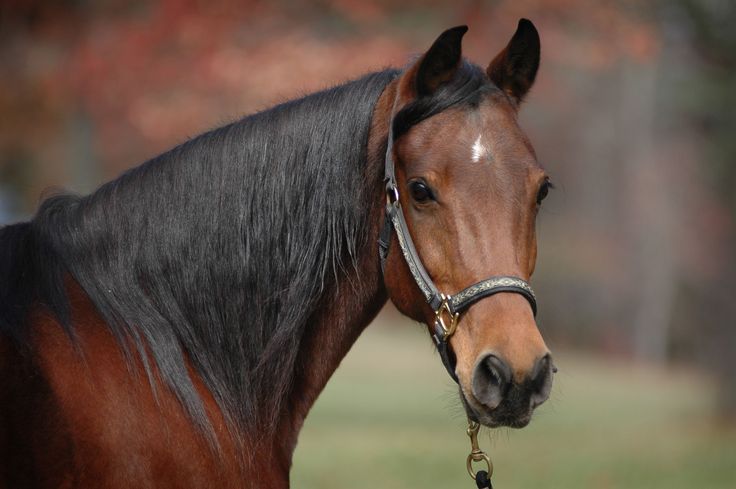
Desvendando o hipotireoidismo em equinos
DOI:
https://doi.org/10.31533/pubvet.v19n07e1804Palavras-chave:
Equinos, hipotireoidismo, hormôniosResumo
O hipotireoidismo em equinos é uma condição endócrina rara, caracterizada pela redução na produção dos hormônios tireoidianos T3 e T4, os quais desempenham funções fundamentais no metabolismo e no desenvolvimento dos animais. O diagnóstico é desafiador, uma vez que os sinais clínicos são inespecíficos e podem se assemelhar a outras enfermidades endócrinas. Os níveis hormonais podem variar de acordo com diversos fatores, sendo, portanto, indispensável a consideração do histórico clínico do animal aliada à realização de exames laboratoriais para avaliação da função tireoidiana. Embora desafiador, o conhecimento da doença, dos exames laboratoriais e sua investigação nos equinos suspeitos são essenciais para o diagnóstico correto.
Referências
Allen, A. L., Doige, C. E., Fretz, P. B., & Townsend, H. G. (1994). Hyperplasia of the thyroid gland and concurrent musculoskeletal deformities in western Canadian foals: Reexamination of a previously described syndrome. The Canadian Veterinary Journal. La Revue Vétérinaire Canadienne, 35(1), 31–38.
Bertin, F. R., Forsythe, L. E., & Kritchevsky, J. E. (2019). Effects of high doses of levothyroxine sodium on serum concentrations of triiodothyronine and thyroxine in horses. American Journal of Veterinary Research, 80(6). https://doi.org/10.2460/ajvr.80.6.565.
Bertin, F. R., Frank, N., Breuhaus, B. A., Schott, H. C., & Kritchevsky, J. E. (2024). Diagnosis and management of thyroid disorders and thyroid hormone supplementation in adult horses and foals. In Equine Veterinary Journal (Vol. 56, Issue 2). https://doi.org/10.1111/evj.13981.
Bilhalva, M. A., Evaristo, T. A., Isnardi, C. P., Rocha, M. M., Alves, C. C., Soares, M. A., Waller, S. B., Borba, A., Santos, T. C., & Costa, P. P. C. (2020). O hipotireoidismo canino e seus efeitos sobre o sistema cardiovascular. PUBVET, 14(4), 1–6. https://doi.org/10.31533/pubvet.v14n4a542.1-6.
Boscarato, A. G., Alberton, L. R., Komochena, H. A. E. S., Botelho, E., Ribeiro, R. de C. L., Orlandini, C. F., & Steiner, D. (2016). Esporotricose equina e hipotireoidismo iatrogênico. Acta Scientiae Veterinariae, 44, 1–6.
Breuhaus, B. A. (2011). Disorders of the equine thyroid gland. In Veterinary Clinics of North America - Equine Practice (Vol. 27, Issue 1). https://doi.org/10.1016/j.cveq.2010.12.002.
Breuhaus, B. A. (2014). Thyroid function and dysfunction in term and premature equine Neonates. Journal of Veterinary Internal Medicine, 28(4), 445. https://doi.org/10.1111/jvim.12382.
Chaker, L., Bianco, A. C., Jonklaas, J., & Peeters, R. P. (2017). Hypothyroidism. Lancet, 390(10101), 1550–1562.
Coleman, M. C., & Whitfield-Cargile, C. (2017). Orthopedic conditions of the premature and dysmature foal. In Veterinary Clinics of North America - Equine Practice (Vol. 33, Issue 2). https://doi.org/10.1016/j.cveq.2017.03.001.
Deprez, P. (2019). Equine metabolic syndrome. Vlaams Diergeneeskundig Tijdschrift, 88(2). https://doi.org/10.26416/pv.43.1.2024.9642.
Drew, B., Barber, W. P., & Williams, D. G. (1975). The effect of excess dietary iodine on pregnant mares and foals. The Veterinary Record, 97(5), 95. https://doi.org/10.1136/vr.97.5.93.
Durval, T. de F., Mencalha, R. N., & Gaudêncio, F. N. (2020). Determinação da concentração plasmática de cTSH no diagnóstico de hipotireoidismo primário em cães: relato de quatro casos. PUBVET, 14(9), 1–5. https://doi.org/10.31533/pubvet.v14n8a646.1-5.
Eroksuz, H., Eroksuz, Y., Ozer, H., Ceribasi, A. O., Yaman, I., & Ilhan, N. (2004). Equine goiter associated with excess dietary iodine. Veterinary and Human Toxicology, 46(3), 147–149.
Frank, N. (2011). Equine metabolic syndrome. In Veterinary Clinics of North America - Equine Practice (Vol. 27, Issue 1, pp. 467–475). https://doi.org/10.1016/j.cveq.2010.12.004.
Harris, P. A. (1999). Review of equine feeding and stable management practices in the UK concentrating on the last decade of the 20th century. Equine Veterinary Journal, 31(S28), 46–54. https://doi.org/10.1111/j.2042-3306.1999.tb05156.x.
Harris, P., Marlin, D., & Gray, J. (1992). Equine thyroid function tests: A preliminary investigation. British Veterinary Journal, 148(1). https://doi.org/10.1016/0007-1935(92)90069-D.
Héripret, D. (2008). Hypothyroidism. In E. Guaguére, P. Prélaud, & M. Craig (Eds.), A pratical guide in canine dermatology (pp. 351–359). Merial, Kaliantis.
Hilderbran, A. C., Breuhaus, B. A., & Refsal, K. R. (2014). Nonthyroidal illness syndrome in adult horses. Journal of Veterinary Internal Medicine, 28(2). https://doi.org/10.1111/jvim.12274.
Hintz, H. F., & Kallfelz, F. A. (1981). Some nutritional problems of horses. In Equine Veterinary Journal (Vol. 13, Issue 3). https://doi.org/10.1111/j.2042-3306.1981.tb03480.x.
Lee, C. C., Johnson, P. J. & Beech, J. (2025). Total thyroxine concentrations and thyrotropin-releasing hormone stimulation test results in Standardbred horses evaluated for poor performance. Journal of Veterinary Internal Medicine, 39(4), 1421–1429. https://doi.org/10.1111/jvim.17087.
Mooney, C. T., & Murphy, D. (1995). Equine hypothyroidism: The difficulties of diagnosis. Equine Veterinary Education, 7(5), 242–245. https://doi.org/10.1111/j.2042-3292.1995.tb01237.x.
Morgan, R., Keen, J., & McGowan, C. (2015). Equine metabolic syndrome. Veterinary Record, 177(7). https://doi.org/10.1136/vr.103226.
Nicassio, M., Aiudi, G., Silvestre, F., Matarrese, R., Salvati, A. S., & Lacalandra, G. M. (2008). Free thyroid hormone and cortisol levels in stallions during the breeding season. Animal Reproduction Science, 107(3–4), 335–336. https://doi.org/10.1016/j.anireprosci.2008.05.112.
Osório, J., & Echeverry, R. (2013). Actualización hipotiroidismo equino. Luna Azul, 36, 1909–2474. https://doi.org/10.17151/luaz.2013.36.16
Reed, S. M., Bayly, W. M., & Sellon, D. C. (2009). Equine internal medicine. Elsevier Health Sciences.
Saunders, H. M., & Jezyk, P. K. (1991). The radiographic appearance of canine congenital hypohyroidism: Skeletal changes with delayed treatment. Veterinary Radiology, 32(4), 171–177. https://doi.org/10.1111/j.1740-8261.1991.tb00103.x.
Smith, B. P. (2014). Large animal internal medicine-E-Book. Elsevier Health Sciences.
Stanley, O., & Hillidge, C. J. (1982). Alopecia associated with hypothyroidism in a horse. Equine Veterinary Journal, 14(2), 165–167. https://doi.org/10.1111/j.2042-3306.1982.tb02378.x.
Vivrette, S. L., Reimers, T. J., & Krook, L. (1984). Skeletal disease in a hypothyroid foal. The Cornell Veterinarian, 74(4), 373–386.
Downloads
Publicado
Edição
Seção
Licença
Direitos autorais (c) 2025 Mateus Nogueira Cunha , Giovana Fiorese Meneghetti, Mariana Gottsfritz Tavares , Neimar Vanderlei Roncati, Bárbara Fidalgo Paretsis, Nicole Fidalgo Paretsis

Este trabalho está licenciado sob uma licença Creative Commons Attribution 4.0 International License.
Você tem o direito de:
Compartilhar — copiar e redistribuir o material em qualquer suporte ou formato
Adaptar — remixar, transformar, e criar a partir do material para qualquer fim, mesmo que comercial.
O licenciante não pode revogar estes direitos desde que você respeite os termos da licença. De acordo com os termos seguintes:
Atribuição
— Você deve dar o crédito apropriado, prover um link para a licença e indicar se mudanças foram feitas. Você deve fazê-lo em qualquer circunstância razoável, mas de nenhuma maneira que sugira que o licenciante apoia você ou o seu uso. Sem restrições adicionais
— Você não pode aplicar termos jurídicos ou medidas de caráter tecnológico que restrinjam legalmente outros de fazerem algo que a licença permita.