Wobbler e malformação vertebral cervical em equinos
DOI:
https://doi.org/10.31533/pubvet.v20n6e1962Palavras-chave:
Anéis traqueais, ataxia equina, mielografiaResumo
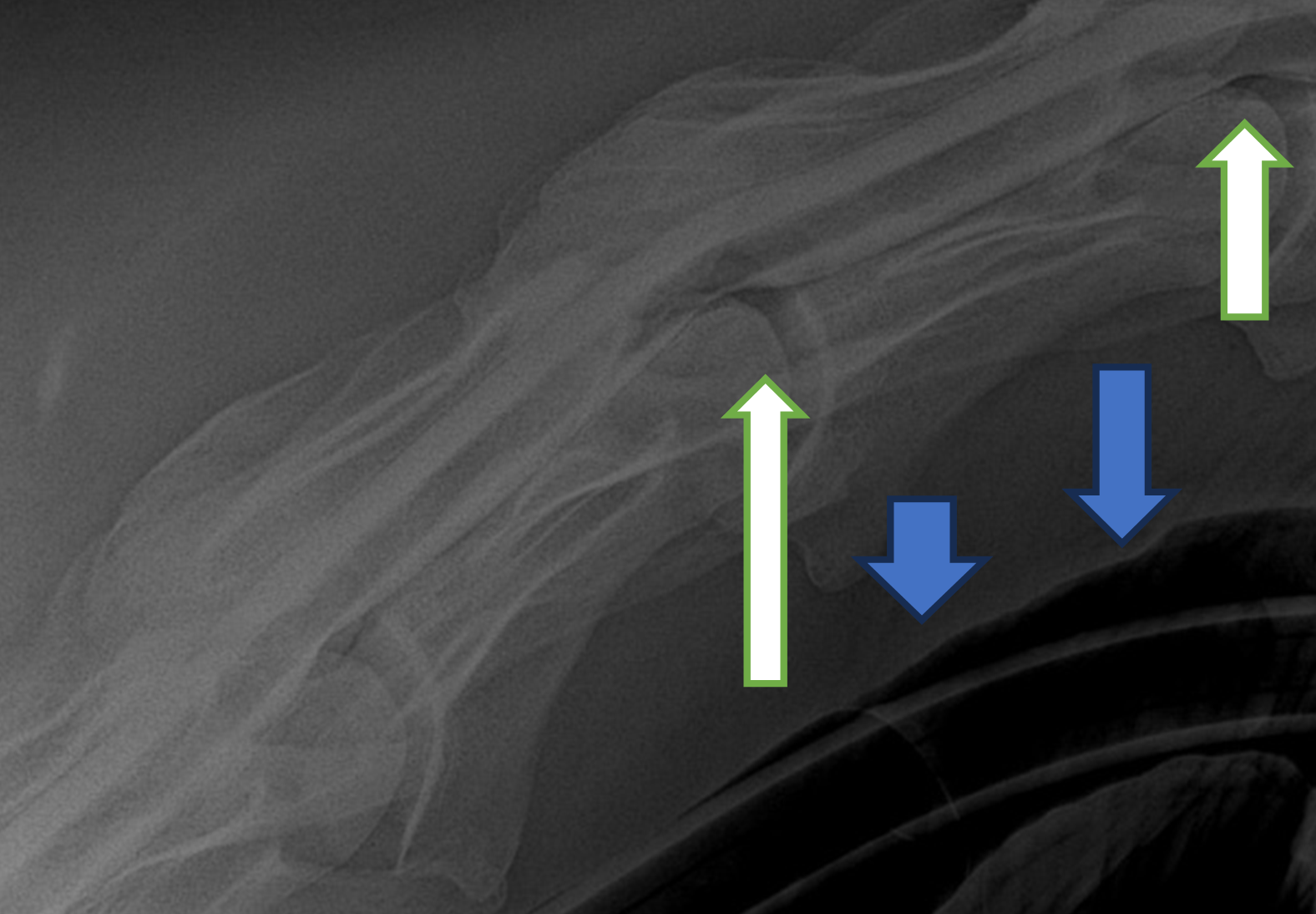
Foram detectadas, em sete equinos, distribuídos em três fêmeas e quatro machos, alterações compressivas medulares na região cervical (síndrome de Wobbler), entre os segmentos C1 e C7, bem como alterações morfológicas (malformações vertebrais cervicais) nas referidas vértebras. Os animais eram mantidos em baia e não apresentavam histórico de trauma. Em todos os equinos examinados clínica e radiograficamente, foi identificada, associada à síndrome de Wobbler, a malformação vertebral cervical equina (MVCE), indicando forte correlação entre os dois achados e sugerindo uma possível participação etiológica da MVCE em casos não traumáticos de Wobbler.
Referências
Beccati, M., Martini, V., Comazzi, S., Fanton, N., & Cornegliani, L. (2016). Lymphocyte subpopulations and Treg cells in dogs with atopic dermatitis receiving ciclosporin therapy: a prospective study. Veterinary Dermatology, 27(1), 17-e5. https://doi.org/10.1111/vde.12277.
Daley, J. (2018). Europe’s First Dogs Disappeared After Neolithic Farmers Arrived with Their Own Pups. Genetic analysis shows ancient canines from the Near East slowly replaced indigenous dog populations of that period.
Derouen, A., Spriet, M., & Aleman, M. (2016). Prevalence of anatomical variation of the sixth cervical vertebra and association with vertebral canal stenosis and articular process osteoarthritis in the horse. Veterinary Radiology and Ultrasound, 57(3), 243–258. https://doi.org/10.1111/vru.12350.
Dyson, S., Phillips, K., Zheng, S., & Aleman, M. (2025). Congenital variants of the ventral laminae of the sixth and seventh cervical vertebrae are not associated with clinical signs or other radiological abnormalities of the cervicothoracic region in Warmblood horses. Equine Veterinary Journal, 57(2), 419–430. https://doi.org/10.1111/evj.14127.
Haussler, K. K. (2026). Congenital Cervical Vertebral and Spinal Cord Anomalies. Veterinary Clinics: Equine Practice, 42(1), 133–152.
Koenig, J. B., Westlund, A., Nykamp, S., Kenney, D. G., Melville, L., Cribb, N., & Oberbichler, D. (2020). Case-Control Comparison of Cervical Spine Radiographs from Horses with a Clinical Diagnosis of Cervical Facet Disease with Normal Horses. Journal of Equine Veterinary Science, 92, 103. https://doi.org/10.1016/j.jevs.2020.103176.
Lewis, D. (2015). The Last Wild Horses Are Rebounding from Extinction. After years of breeding programs, the last truly wild horses return.
May-Davis, S. (2014). The Occurrence of a Congenital Malformation in the Sixth and Seventh Cervical Vertebrae Predominantly Observed in Thoroughbred Horses. Journal of Equine Veterinary Science, 34(11–12), 1313–1317. https://doi.org/10.1016/j.jevs.2014.09.012.
May-Davis, S., Eckelbarger, P. B., Dzingle, D., & Saber, E. (2024). Characterization and Association of the Missing Ventral Tubercle(s) from the Sixth Cervical Vertebra and Transpositions on the Ventral Surface of the Seventh Cervical Vertebra in Modern Equus ferus caballus. Animals, 14(12), 1830. https://doi.org/10.3390/ani14121830.
May-Davis, S., & Walker, C. (2015). Variations and implications of the gross morphology in the Longus colli muscle in Thoroughbred and Thoroughbred derivative horses presenting with a congenital malformation of the sixth and seventh cervical vertebrae. Journal of Equine Veterinary Science, 35(7). https://doi.org/10.1016/j.jevs.2015.03.002.
Mayhew, I. G., Watson, A. G., & Hesissan, J. A. (1978). Congenital Occipitoatlantoaxial Malformations in the Horse. Equine Veterinary Journal, 10(2), 103–113. https://doi.org/10.1111/j.2042-3306.1978.tb02232.x.
Nodjimbdem, K. (2016). How Conservationists Use GPS to Track the Wildest Horses in the World. These horses’ wildness makes them unique. It also makes them uniquely difficult for researchers to monitor and track.
Osborne, M. (2022). Scientists Uncover the Story of Donkey Domestication. Humans tamed the equines about 7,000 years ago in East Africa.
Ricardi, G., & Dyson, S. J. (1993). Forelimb lameness associated with radiographic abnormalities of the cervical vertebrae. Equine Veterinary Journal, 25(5), 422–426. https://doi.org/10.1111/j.2042-3306.1993.tb02984.x.
Ros, K. B., Doveren, A., Dreessen, C., Pellmann, R., Beccati, F., Zimmermann, E., & Distl, O. (2023). Radiological Methods for the Imaging of Congenital Malformations of C6-T1, the First and Second Sternal Ribs and Development of a Classification System, Demonstrated in Warmblood Horses. Animals, 13(23), 3732. https://doi.org/10.3390/ani13233732.
Vasconcellos, L. A. S. (1995). Problemas neurológicos na clínica equina. Editora Varela.
Vasconcellos, L. A. S. (2019). Doenças Respiratórias nos Equinos e seus Métodos de Diagnóstico por Imagem (1st ed., Vol. 1). Editora MedVet.
Vasconcellos, L. A. S. (2022). Neurologia e neurocirurgia equina: Princípios gerais. Editora Lusófona.
Vasconcellos, L. A. S. (2024). Irregularidade morfológica dos anéis traqueais em equinos associada ou não à malformação cervical. PUBVET, 18(5). https://doi.org/10.31533/pubvet.v18n05e1588.
Vasconcellos, L. A. S. (2024). Morphological irregularity of tracheal rings in horses, associated or not with cervical malformation. PUBVET, 18(5), 1–6. https://doi.org/10.31533/pubvet.v19n11e1863.
Vasconcellos, L. A. S. (2025). Arthrodesis Cervical (C3C4) as a Resolution of Incoordination in Foal. 16 Th Jornadas Internacionais Hospital Muralha de Évora.
Veraa, S., Bergmann, W., van den Belt, A. J., Wijnberg, I., & Back, W. (2016). Ex vivo computed tomoghrafic evaluations of morphology variationsin equine cervical vertebrae. Veterinary Radiology and Ultrasound, 57(5). https://doi.org/10.1111/vru.12393.
Veraa, S., Graaf, K., Wijnberg, I. D., Back, W., Vernooij, H., Nielen, M., & Belt, A. J. M. (2020). Caudal cervical vertebral morphological variation is not associated with clinical signs in Warmblood horses. Equine Veterinary Journal, 52(2), 219–224. https://doi.org/10.1111/evj.13140.
Wong, E. H. K., & Hanner, R. H. (2008). DNA barcoding detects market substitution in North American seafood. Food Research International, 41(8), 828–837.
Downloads
Publicado
Edição
Seção
Licença
Direitos autorais (c) 2026 Luiz Alberto da Silva Vasconcellos

Este trabalho está licenciado sob uma licença Creative Commons Attribution 4.0 International License.
Você tem o direito de:
Compartilhar — copiar e redistribuir o material em qualquer suporte ou formato
Adaptar — remixar, transformar, e criar a partir do material para qualquer fim, mesmo que comercial.
O licenciante não pode revogar estes direitos desde que você respeite os termos da licença. De acordo com os termos seguintes:
Atribuição
— Você deve dar o crédito apropriado, prover um link para a licença e indicar se mudanças foram feitas. Você deve fazê-lo em qualquer circunstância razoável, mas de nenhuma maneira que sugira que o licenciante apoia você ou o seu uso. Sem restrições adicionais
— Você não pode aplicar termos jurídicos ou medidas de caráter tecnológico que restrinjam legalmente outros de fazerem algo que a licença permita.