Evaluation of the physical quality of pelleted feeds for finishing pigs
DOI:
https://doi.org/10.31533/pubvet.v20n7e1980Keywords:
Feed intake, pellet durability, finesAbstract
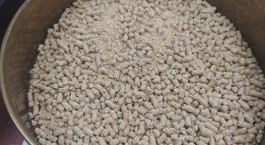
Pelleting is widely used in animal nutrition because it improves nutrient digestibility, feed intake, and feed conversion efficiency. However, the presence of fines, consisting of particles generated by pellet disintegration, may compromise these benefits. This study aimed to evaluate the physical quality of pelleted feeds supplied to finishing pigs on a commercial farm, with emphasis on the percentage of fines. Six feed formulations representative of different production phases were collected from feeders and analyzed. The samples were subjected to the Embrapa Pellet Evaluation Method (MEP) to determine the percentage of fines. The results revealed significant variation among feed batches, particularly in the Growth 2A phase, which exhibited up to 41.3% fines, a value exceeding the recommended level and potentially detrimental to animal performance. These findings highlight the importance of implementing quality control measures during feed production, storage, and distribution to preserve the benefits of pelleting and improve the efficiency of the production system.
References
Abdollahi, M. R. (2011). Influence of feed processing on the performance, nutrient utilization and gut development of poultry and feed quality. Massey University.
Badger, P., Otott, H., Paulk, C. B., Stark, C. R., & Donnelly, A. (2023). Effects of Pellet Quality on Growth Performances of Pigs When Fed Diets During Varying Weight Ranges. Journal of Animal Science, 101(Supplement_2), 36–37. https://doi.org/10.1093/jas/skad341.041.
Bellaver, C., & Nones, K. (2000). A Importância da Granulometria, da Mistura e da Peletização da Ração Avícola. Simpósio Goiano de Avicultura, (IV).
Brustolini, A. P. L. (2014). Avaliação do tamanho de partícula e forma física da ração sobre o desempenho e características de carcaça de suínos machos castrados em crescimento e terminação. Universidade Federal de Minas Gerais.
Capodifoglio, B. F. (2023). Peletização: benefícios e fatores que interferem na formação dos peletes. In Agroceres Multimix.
Castro, L. T. S., Barbosa, L. M. R., & Vasconcelos, B. S. (2020). Gestão na suinocultura: um conceito holístico. PUBVET, 14(5), 1–13. https://doi.org/10.31533/pubvet.v14n5a569.1-13.
Ebbing, M. A., Yacoubi, N., Naranjo, V., Sitzmann, W., & Gierus, M. (2022a). Influence of Expander Conditioning Prior to Pelleting on Pellet Quality, Broiler Digestibility and Performance at Constant Amino Acids Composition while Decreasing AMEN. Animals, 12(22). https://doi.org/10.3390/ani12223126.
Ebbing, M. A., Yacoubi, N., Naranjo, V., Sitzmann, W., Schedle, K., & Gierus, M. (2022b). Towards Large Particle Size in Compound Feed: Using Expander Conditioning Prior to Pelleting Improves Pellet Quality and Growth Performance of Broilers. Animals, 12(19). https://doi.org/10.3390/ani12192707.
Evangelista, M. Z., Zeferino, C. P., & Brennecke, K. (2021). Recomendações de granulometria para rações de suínos: Revisão. PUBVET, 15(1), 1–8. https://doi.org/10.31533/pubvet.v15n01a722.
Kenny, M., & Rollins, D. A. (2008). Qualidade Física da Ração. In Aviagem Brasil Tecnologia.
Martins, F. M., Santos Filho, J. I., Sandi, A. J., Miele, M., Bertol, T. M., Amaral, A. L., Mores, N., Kich, J. D., & Dalla Costa, O. A. (2012). Coeficientes técnicos para o cálculo do custo de produção de suínos. Embrapa Suínos e Aves-Comunicado Técnico, 506, 1–10.
McKinney, L. J., & Teeter, R. G. (2004). Predicting effective caloric value of nonnutritive factors: I. Pellet quality and II. Prediction of consequential formulation dead zones. Poultry Science, 83(7), 1165–1174. https://doi.org/10.1093/ps/83.7.1065.
Moritz, J. S., & Lilly, K. G. S. (2010). Production strategies and feeding opportunities for pellets of high quality. Proceding of the 8th Annual Mid-Atlantic Nutrition Conference, 85–90.
Muramatsu, K. (2013). Aplicação de modelagem preditiva no processo de peletização de rações para frangos de corte. Universiade Federal do Paraná.
Nemechek, J. E., Tokach, M. D., Dritz, S. S., Goodband, R. D., Derouchey, J. M., & Woodworth, J. C. (2015). Effects of diet form and type on growth performance, carcass yield, and iodine value of finishing pigs. Journal of Animal Science, 93(9), 4486–4499. https://doi.org/10.2527/jas.2015-9149.
Pucci, L. E. A., Rodrigues, P. B., Bertechini, A. G., Nascimento, G. A. J., Lima, R. R., & Silva, L. R. (2010). Forma física, suplementação enzimática e nível nutricional de rações para frangos de corte na fase inicial: desempenho e digestibilidade dos nutrientes. Revista Brasileira de Zootecnia, 39(6), 1272–1279. https://doi.org/10.1590/s1516-35982010000600016.
Schmidt, A., Coldebella, A., & Lima, G. J. M. M. (2011). Método Embrapa de Avaliação de Peletização. Embrapa, 369.
Schroeder, B., Andretta, I., Kipper, M., Franceschi, C. H., & Remus, A. (2020). Empirical modelling the quality of pelleted feed for broilers and pigs. Animal Feed Science and Technology, 265. https://doi.org/10.1016/j.anifeedsci.2020.114522.
Downloads
Published
Issue
Section
License
Copyright (c) 2026 Karol Zancan Thiesen, Marciel Rohden, Patrícia Diniz Ebling

This work is licensed under a Creative Commons Attribution 4.0 International License.
Você tem o direito de:
Compartilhar — copiar e redistribuir o material em qualquer suporte ou formato
Adaptar — remixar, transformar, e criar a partir do material para qualquer fim, mesmo que comercial.
O licenciante não pode revogar estes direitos desde que você respeite os termos da licença. De acordo com os termos seguintes:
Atribuição
— Você deve dar o crédito apropriado, prover um link para a licença e indicar se mudanças foram feitas. Você deve fazê-lo em qualquer circunstância razoável, mas de nenhuma maneira que sugira que o licenciante apoia você ou o seu uso. Sem restrições adicionais
— Você não pode aplicar termos jurídicos ou medidas de caráter tecnológico que restrinjam legalmente outros de fazerem algo que a licença permita.