Between between flavor and food safety: the antimicrobial potential of wasabi in raw fish consumption
DOI:
https://doi.org/10.31533/pubvet.v20n3e1926Keywords:
AITC, aquaculture, japanese culture, raw fish, wasabiAbstract
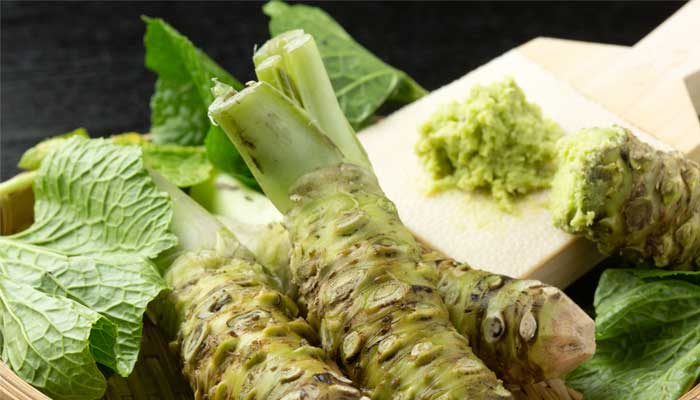
Aquaculture has become one of the main activities in Brazilian agribusiness, accompanied by the increasing consumption of fish, especially in raw preparations typical of East Asian cuisine. However, this expansion raises concerns regarding food safety, since fish consumed in natura may harbor pathogenic bacteria and zoonotic parasites, posing a risk to public health. This study aimed to understand the relationship between the growth of aquaculture, the occurrence of zoonoses, and bacterial contamination in fish intended for raw consumption, as well as to evaluate the antimicrobial potential of wasabi, particularly allyl isothiocyanate (AITC), as a complementary food safety tool. A literature review was conducted between August and November 2025, using combinations of keywords in Portuguese and English, including aquaculture, fish-borne zoonoses, raw fish consumption, and wasabi antimicrobial activity, searched in databases such as SciELO, PubMed, Google Scholar, and CAPES Journals. The findings indicate that, although Brazilian aquaculture is expanding, the increased consumption of sushi and sashimi leads to greater exposure to microorganisms such as Salmonella spp., Staphylococcus aureus, Escherichia coli, and Vibrio spp., as well as zoonotic parasites that are still poorly documented in the country. In parallel, studies show that wasabi, rich in AITC, exhibits relevant antimicrobial activity, capable of inhibiting bacteria commonly found in raw fish, thereby acting as an additional safety barrier; however, it does not replace essential practices such as freezing, cooking, and sanitary inspection. It is concluded that strengthening preventive measures and expanding research on bacterial and parasitic contamination in the fish supply chain are essential to ensure safe consumption. Wasabi emerges as a promising natural adjunct, but it should complement sanitary standards and hygienic control in the production and handling of raw fish.
References
Amelia, S., Lubis, N. D. A., Siregar, M. A., & Rozi, M. F. (2018). Antimicrobial Effect of Wasabi japonica or Wasabi on Raw Salmon in Served Sashimi at Japanese Restaurants in Medan. International Journal of Medical Science and Clinical Invention, 5(7). https://doi.org/10.18535/ijmsci/v5i7.12.
ANUALPEC. (2025). Anuário da Pecuária Brasileira (20th ed., Vol. 1). Instituto FNP.
Conte Júnior, C. A., & Rodrigues, B. L. (2013). Tecnologia avançada na conservação de pescado. Revista Animal Business Brasil, 3(7), 50–56.
Eiras, J. C., & Pavanelli, G. C. (2020). Sobre zoonoses provocadas por alguns Nematoda parasitas de peixes no Brasil About zoonosis caused by some fish-born nematodes in Brazil. Revista Anápolis Digital, 12(3).
Farias, T. H. V., Pala, G., & Araújo, L. R. S. (2021). Parasitas de peixes com potencial zoonótico descritos no Brasil. Ars Veterinária, 37(4), 211–224. https://doi.org/10.15361/2175-0106.2021v37n4p211-224.
Food and Environmental Hygiene Department – FEHD (2000). Microbiological Hazard Evaluation: Sushi and Sashimi in Hong Kong — An Evaluation of Sushi and Sashimi Microbiological Surveillance 1997–1999. Risk Assessment Studies, Report No. 2. Hong Kong: FEHD, 2000.
Lu, Z., Dockery, C. R., Crosby, M., Chavarria, K., Patterson, B., & Giedd, M. (2016). Antibacterial activities of wasabi against Escherichia coli O157: H7 and Staphylococcus aureus. Frontiers in Microbiology, 7(SEP). https://doi.org/10.3389/fmicb.2016.01403.
Masson, M. L., & Pinto, R. A. (1998). Perigos potenciais associados ao consumo de alimentos derivados de peixe cru. Boletim CEPPA: Curitiba, 16(1), 71–84.
Okumura, M. P. M., Pérez, A. C. A., & Espíndola Filho, A. (1999). Principais zoonoses parasitárias transmitidas por pescado-revisão. Revista de Educação Continuada em Medicina Veterinária e Zootecnia do CRMV-SP, 2(2), 66–80. https://doi.org/10.36440/recmvz.v2i2.3386.
Ozfoodnet Working Group – OWG. (2005). Monitoring the incidence and causes of diseases potentially transmitted by food in Australia: annual report of the OzFoodNet network, 2004. Communicable Diseases Intelligence, Canberra, 29(2), 165–192.
Sartori, A. G. O., & Amancio, R. D. (2012). Pescado: importância nutricional e consumo no Brasil. Segurança Alimentar e Nutricional, 19(2), 83–93. https://doi.org/10.20396/san.v19i2.863.
Silva, A. T. F. S., Rocha, P. G. G., Fonseca Filho, L. B., Costa, C. A., Nascimento, J. C. S. N., & Carvalho Neto, P. M. (2017). Alterações microbianas dos produtos de pescados curados: Revisão. PUBVET, 11(7), 658–661. https://doi.org/10.22256/pubvet.v11n7.658-661.
Silva, A. F. H. (2016). Benefícios do consumo regular de pescado para a saúde humana.
Tavares, G. C. (2016). Zoonoses parasitárias associadas ao consumo de carne de peixe cru. PUBVET, 6(25), 1411–1416. https://doi.org/10.22256/pubvet.v6n25.1416.
Teixeira, L. C., & Garcia, P. P. C. (2016). Qualidade do pescado: captura, conservação e contaminação. Acta de Ciências e Saúde, 1(2), 1–15.
Wagner, Y. G., Coelho, A. B., & Travassos, G. F. (2022). Análise do consumo domiciliar de pescados no Brasil utilizando dados da POF 2017-2018. Revista de Economia e Sociologia Rural, 61, 1–28.
Downloads
Published
Issue
Section
License
Copyright (c) 2026 Bernardo Milanezi Luchi, Rafael Archangelo Barbosa Polese, Joice Sousa Carlini, Débora Ziviani Scalzer, João Zamae

This work is licensed under a Creative Commons Attribution 4.0 International License.
Você tem o direito de:
Compartilhar — copiar e redistribuir o material em qualquer suporte ou formato
Adaptar — remixar, transformar, e criar a partir do material para qualquer fim, mesmo que comercial.
O licenciante não pode revogar estes direitos desde que você respeite os termos da licença. De acordo com os termos seguintes:
Atribuição
— Você deve dar o crédito apropriado, prover um link para a licença e indicar se mudanças foram feitas. Você deve fazê-lo em qualquer circunstância razoável, mas de nenhuma maneira que sugira que o licenciante apoia você ou o seu uso. Sem restrições adicionais
— Você não pode aplicar termos jurídicos ou medidas de caráter tecnológico que restrinjam legalmente outros de fazerem algo que a licença permita.