Myxomatous mitral valve disease in a canine
Case report
DOI:
https://doi.org/10.31533/pubvet.v19n09e1840Keywords:
Veterinary cardiology, clinical medicine, treatment, disease stagingAbstract
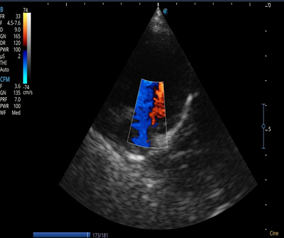
Mitral valve endocardiosis is the most commonly acquired heart disease in dogs, characterized by myxomatous degeneration of the mitral valve, leading to chronic mitral regurgitation, volume overload and, in more advanced stages, congestive heart failure. Given its high prevalence and clinical impact on geriatric patients, this study aimed to report a case of endocardiosis in an elderly dog, correlating clinical, laboratory and echocardiographic findings, as well as disease classification and therapeutic response to the established treatment protocol. A 14-year-old, 5.6 kg male mixed-breed dog was presented with a dry nocturnal cough, cyanosis, dyspnea, and exercise intolerance. Physical examination revealed a grade IV systolic murmur at the mitral focus, a cardiac thrill, and cyanotic mucous membranes. Echocardiography showed thickening of the mitral valve with leaflet prolapse, left atrial enlargement, diastolic dysfunction, and preserved systolic function, confirming the diagnosis of mitral endocardiosis with hemodynamic compromise. The patient was classified as stage C, according to the ACVIM guidelines. Initial treatment included furosemide, butorphanol, oxygen therapy and pimobendan, followed by maintenance therapy with pimobendan, torasemide, and omega-3 supplementation. Laboratory tests revealed findings consistent with heart failure, such as elevated blood urea nitrogen (BUN), hypertriglyceridemia and mild hemoconcentration. The combination of clinical, laboratory and echocardiographic findings was consistent with the systemic and progressive effects of stage C degenerative mitral valve disease. The clinical response to treatment was satisfactory, with regression of respiratory symptoms, stabilization of the condition, and improved exercise tolerance. In conclusion, early recognition of clinical signs and appropriate disease staging are essential in selecting effective treatment strategies. Clinical management based on current guidelines proved effective in symptom control, contributing to the preservation of quality of life in geriatric cardiac patients.
References
Aikawa, E., Krenning, G., & Baker, A. H. (2019). Endothelial to mesenchymal transition. Circulation, 104(21), 2525–2532. https://doi.org/10.1016/j.jacc.2018.09.089.
Almeida, C. O. S. (2021). Degeneração mixomatosa de valva mitral em cães: Revisão. PUBVET, 15(7), 1–10. https://doi.org/10.31533/pubvet.v15n07a863.1-10.
Besche, B., Blondel, T., Guillot, E., Garelli-Paar, C., & Oyama, M. A. (2020). Efficacy of oral torasemide in dogs with degenerative mitral valve disease and new onset congestive heart failure: The CARPODIEM study. Journal of Veterinary Internal Medicine, 34(5), 1746–1758. https://doi.org/10.1111/jvim.15864.
Bionda, A., Cortellari, M., Bagardi, M., Frattini, S., Negro, A., Locatelli, C., Brambilla, P. G. & Crepaldi, P. A. (2020). Genomic Study of Myxomatous Mitral Valve Disease in Cavalier King Charles Spaniels. Animals (Basel), 16;10(10):1895. doi: 10.3390/ani10101895. PMID: 33081147; PMCID: PMC7602727.
Borgarelli, M., & Haggstrom, J. (2010). Canine degenerative myxomatous mitral valve disease: Natural history, clinical presentation and therapy. Veterinary Clinics of North America - Small Animal Practice, 40(4). https://doi.org/10.1016/j.cvsm.2010.03.008.
Boswood, A., Häggström, J., Gordon, S. G., Wess, G., Stepien, R. L., Oyama, M. A., Keene, B. W., Bonagura, J., MacDonald, K. A., & Patteson, M. (2016). Effect of pimobendan in dogs with preclinical myxomatous mitral valve disease and cardiomegaly: the EPIC study—a randomized clinical trial. Journal of Veterinary Internal Medicine, 30(6), 1765–1779. https://doi.org/10.1016/j.asams.2017.03.008.
Boyle, K. L., & Leech, E. (2012). A review of the pharmacology and clinical uses of pimobendan. In Journal of Veterinary Emergency and Critical Care (Vol. 22, Issue 4, pp. 398–408). https://doi.org/10.1111/j.1476-4431.2012.00768.x.
Bressan, T. F. (2017). Localização dos receptores opioides no sistema nervoso central e avaliação dos efeitos analgésico e sedativo da morfina e butorfanol em iguanas verdes (Iguana iguana). Universidade de São Paulo.
Del Rio, J. M., Grecu, L., & Nicoara, A. (2019). Right ventricular function in left heart disease. Seminars in Cardiothoracic and Vascular Anesthesia, 23(1). https://doi.org/10.1177/1089253218799345.
Diepen, J. A. V., Berbée, J. F. P., Havekes, L. M. & Rensen. P. C. N. (2013). Interactions between inflammation and lipid metabolism: Relevance for efficacy of anti-inflammatory drugs in the treatment of atherosclerosis. Atherosclerosis, 228(2), 306 - 315
Dobler, G. H., Oliveira, H. S., & Almeida, M. R. (2023). Estudo anatômico das lesões endocardiose em cães, prevalência e epidemiologia. Arquivos de Ciências Veterinárias e Zoologia da UNIPAR, 26(1cont). https://doi.org/10.25110/arqvet.v26i1cont-006.
Fox, P. R. (2012). Pathology of myxomatous mitral valve disease in the dog. Journal of Veterinary Cardiology, 14(1), 103–126. https://doi.org/10.1016/j.jvc.2012.02.001.
Feingold, K.R. & Grunfeld, C. (2000). Effect of Inflammation and Infection on Lipids and Lipoproteins. In: Feingold KR, Ahmed SF, Anawalt B, et al., editors. Endotext. South Dartmouth (MA): MDText.com, Available from:https://www.ncbi.nlm.nih.gov/books/NBK326741/?utm_source=chatgpt.com
Freeman, L. M. (2010). Beneficial effects of omega-3 fatty acids in cardiovascular disease. Journal of Small Animal Practice, 51(9). https://doi.org/10.1111/j.1748-5827.2010.00968.x.
Gordon, D. (2012). Efeito da torasemida e furosemida em variáveis clínicas, laboratoriais, radiográficas e de qualidade de vida em cães com insuficiência cardíaca secundária à doença da valva mitral. Revista de Cardiologia Veterinária, 14, 253–259.
Hambrook, L. E., & Bennett, P. F. (2012). Effect of pimobendan on the clinical outcome and survival of cats with non-taurine responsive dilated cardiomyopathy. Journal of Feline Medicine and Surgery, 14(4), 233–239. https://doi.org/10.1177/1098612X11429645.
Jericó, M. M., Andrade Neto, J. P., & Kogika, M. M. (2015). Tratado de medicina interna de cães e gatos. Roca Ltda.
Keene, B. W., Atkins, C. E., Bonagura, J. D., Fox, P. R., Häggström, J., Fuentes, V. L., Oyama, M. A., Rush, J. E., Stepien, R., & Uechi, M. (2019). ACVIM consensus guidelines for the diagnosis and treatment of myxomatous mitral valve disease in dogs. Journal of Veterinary Internal Medicine, 33(3), 1127–1140. https://doi.org/10.1111/jvim.15488. Acesso em: 2 abr. 2020.
McCutcheon, K., & Manga, P. (2018). Left ventricular remodelling in chronic primary mitral regurgitation: Implications for medical therapy. Cardiovascular Journal of Africa, 29(1), 51–64. https://doi.org/10.5830/CVJA-2017-009.
Menciotti, G., Borgarelli, M., Aherne, M., Wesselowski, S., Häggström, J., Ljungvall, I., Lahmers, S. M., & Abbott, J. A. (2017). Mitral valve morphology assessed by three-dimensional transthoracic echocardiography in healthy dogs and dogs with myxomatous mitral valve disease. Journal of Veterinary Cardiology, 19(2). https://doi.org/10.1016/j.jvc.2017.01.002.
Monteiro, B. O., Lascelles, B. D. X., Murrell, J., Robertson, S., Steagall, P. V. M., & Wright, B. (2023). 2022 WSAVA guidelines for the recognition, assessment and treatment of pain. Journal of Small Animal Practice, 64(4). https://doi.org/10.1111/jsap.13566
Muzzi, R. A. L., Muzzi, L. A. L., Araújo, R. B., & Lázaro, D. A. (2009). Doença crônica da valva mitral em cães: Avaliação clínica funcional e mensuração ecocardiográfica da valva mitral. Arquivo Brasileiro de Medicina Veterinária e Zootecnia, 61(2), 337–344. https://doi.org/10.1590/S0102-09352009000200009.
Nasciutti, P. R., Moraes, A. T., Santos, T. K., Queiroz, K. K. G., Costa, A. P. A., Amaral, A. R., Olivindo, R. F. G., Pontieri, C. F. F., Jeremias, J. T., Vendramini, T. H. A., Brunetto, M. A., & Carvalho, R. (2021). Protective effects of omega-3 fatty acids in dogs with myxomatous mitral valve disease stages B2 and C. PLoS ONE, 16(7 July). https://doi.org/10.1371/journal.pone.0254887.
Perin, C., Bariani, M. H., Franco, D. F., & Filadelpho, A. L. (2007). Endocardiose da valva mitral em cães. Revista Cientifica de Medicina Veterinária, 8.
Petrus, L. C., Gimenes, A. M., & Mantovani, M. M. (2020). Degeneração mixomatosa valvar. In M. H. M. A. Larsson (Ed.), Tratado de cardiologia de cães e gatos (pp. 155–167). Interbook.
Pouchelon, J. L., Jamet, N., Gouni, V., Tissier, R., Serres, F., Sampedrano, C. C., Castaignet, M., Lefebvre, H. P., & Chetboul, V. (2008). Effect of benazepril on survival and cardiac events in dogs with asymptomatic mitral valve disease: A retrospective study of 141 cases. Journal of Veterinary Internal Medicine, 22(4), 905–914. https://doi.org/10.1111/j.1939-1676.2008.0105.x.
Richards, J. M., Farrar, E. J., Kornreich, B. G., Moїse, N. S., & Butcher, J. T. (2012). The mechanobiology of mitral valve function, degeneration, and repair. Journal of Veterinary Cardiology, 14(1), 47–58. https://doi.org/10.1016/j.jvc.2012.01.002.
Riviere, J. E., & Papich, M. G. (2018). Veterinary pharmacology and therapeutics. John Wiley & Sons.
Rudenko, A., Rudenko, P., Glamazdin, I., Vatnikov, Y., Kulikov, E., Sachivkina, N., Rudenko, V., Sturov, N., Babichev, N., Romanova, E., Rusanova, E., & Lukina, D. (2020). Assessment of respiratory rate in dogs during the sleep with mitral valve endocardiosis, complicated by congestive heart failure syndrome: The degree of adherence for this test by animal owners and its impact on patient survival. Systematic Reviews in Pharmacy, 11(5), 358–367. https://doi.org/10.31838/srp.2020.5.51.
Schwarz, K., Singh, S., Dawson, D., & Frenneaux, M. P. (2013). Right ventricular function in left ventricular disease: Pathophysiology and implications. Heart Lung and Circulation, 22(7). https://doi.org/10.1016/j.hlc.2013.03.072.
Soares, E. C., Larsson, M. H. M. A., & Yamato, R. J. (2005). Chronic valvular disease: Correlation between clinical, electrocardiographic, radiographic and echocardiographic aspects in dogs. Arquivo Brasileiro de Medicina Veterinária e Zootecnia, 57(4), 436–441. https://doi.org/10.1590/S0102-09352005000400003.
Sousa, P. R., Mendes, T., Moura, R., & Carvalho, R. (2019). Pimobendan: contexto histórico e aplicação clínica em cães. Enciclopédia Biosfera, 16(29). https://doi.org/10.18677/encibio_2019a101.
Strunz, C. M., Marcondes-Santo, M., Takada, J. Y., Fragata, F. S., & Mansur, A. P. (2017). Escore de qualidade de vida como preditor de mortalidade em cães com doença degenerativa da valva mitral. Arquivos Brasileiros de Cardiologia, 108, 347–353. https://doi.org/10.5935/abc.20170032.
Williams, B., Friedenberg, S. G., Keene, B. W., Tou, S.P., DeFrancesco, T. C. & Meurs, KM. (2021). Use of whole genome analysis to identify shared genomic variants across breeds in canine mitral valve disease. Hum Genet,140(11):1563-1568. doi: 10.1007/s00439-021-02297-w. 34176051.
Downloads
Published
Issue
Section
License
Copyright (c) 2025 Késia Gama de Jesus Brito, Nathalia de Mariz Cartaxo, Marcelo Dourado da Silva, Lorrany Rodrigues Pinto, Cícera Fernanda Dias da Conceição, Cândido Queiroz Oliveira das Chagas, Jamille Amarante Mota, Beatriz Limoeiro Dias, Rodrigo Lima Carneiro

This work is licensed under a Creative Commons Attribution 4.0 International License.
Você tem o direito de:
Compartilhar — copiar e redistribuir o material em qualquer suporte ou formato
Adaptar — remixar, transformar, e criar a partir do material para qualquer fim, mesmo que comercial.
O licenciante não pode revogar estes direitos desde que você respeite os termos da licença. De acordo com os termos seguintes:
Atribuição
— Você deve dar o crédito apropriado, prover um link para a licença e indicar se mudanças foram feitas. Você deve fazê-lo em qualquer circunstância razoável, mas de nenhuma maneira que sugira que o licenciante apoia você ou o seu uso. Sem restrições adicionais
— Você não pode aplicar termos jurídicos ou medidas de caráter tecnológico que restrinjam legalmente outros de fazerem algo que a licença permita.