Assessment of welfare and impacts caused by the equipment used on rodeo animals
DOI:
https://doi.org/10.31533/pubvet.v19n08e1822Keywords:
Welfare, cortisol, rodeo, stressAbstract
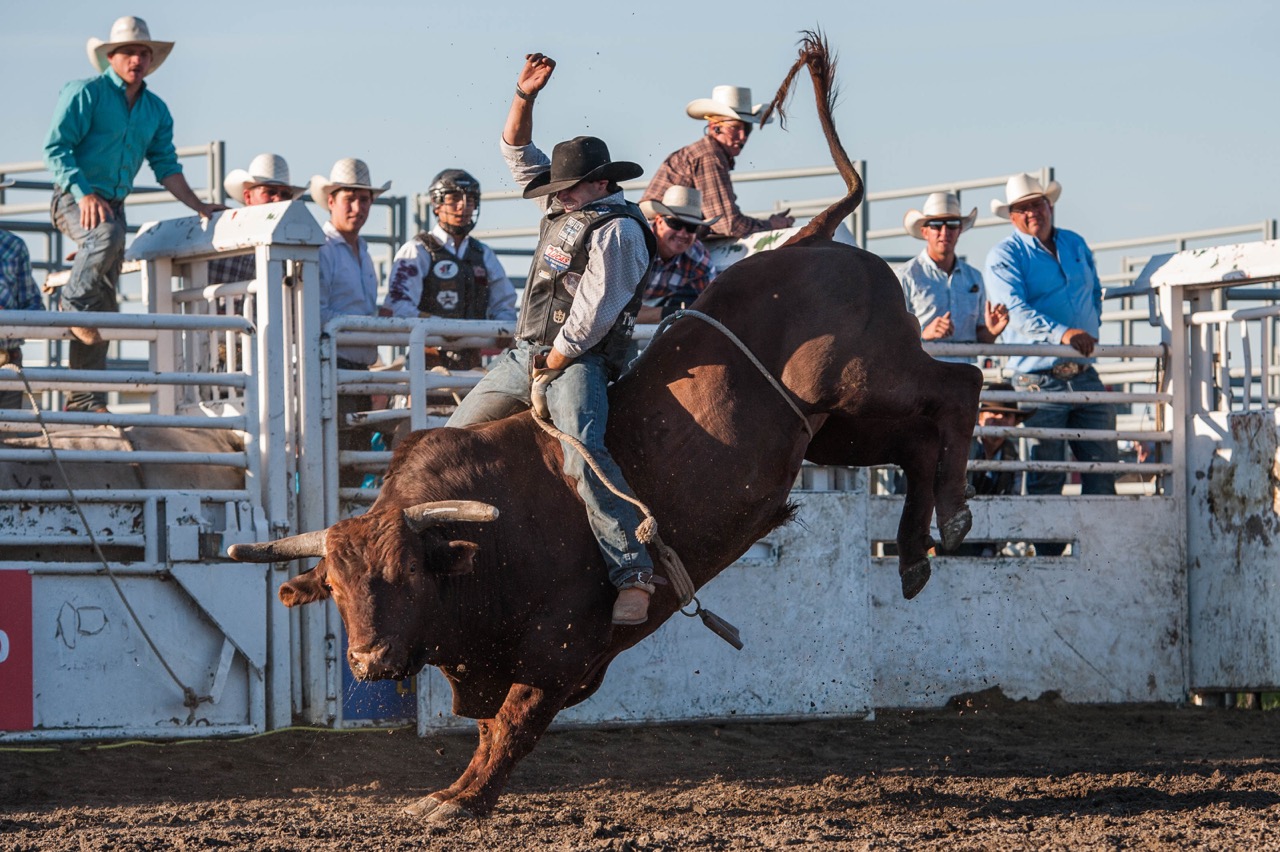
Rodeo, as a practice of cultural, sporting, and economic relevance, generates debates about its impact on animal welfare, especially concerning the equipment used. Thus, this study correlated behavior and cortisol levels with stress in bulls subjected to the use of a bucking strap, lariat, and spurs, analyzing physiological and behavioral parameters associated with stress. The methodology included dividing ten animals into two groups: one subjected only to the use of the equipment with behavioral assessment and the other to full riding and blood collection for pre- and post-ride cortisol measurement. The behavioral results showed that the animals exposed only to the equipment remained calm, without signs of agitation, even during routine activities. The group subjected to riding exhibited a non-significant increase in serum cortisol levels. In this context, it was observed that the use of the equipment (bucking strap, spurs, and lariat) did not cause visual behavioral changes in the animals, nor was there a significant difference in serum cortisol measurement pre- and post-ride. Therefore, when rodeos are conducted within the established and monitored technical and legal parameters, there is no interference with animal welfare, allowing for the reconciliation of cultural expression with respect for the animal athletes.
References
ABRT. (2015). Manual de Conduta da ABTR – Associação Brasileira de Criadores de Touros de Rodeio.
Arnaldi, G., Angeli, A., Atkinson, A. B., Bertagna, X., Cavagnini, F., Chrousos, G. P., Fava, G. A., Findling, J. W., Gaillard, R. C., & Grossman, A. B. (2003). Diagnosis and complications of Cushing’s syndrome: a consensus statement. The Journal of Clinical Endocrinology & Metabolism, 88(12), 5593–5602. https://doi.org/10.1210/jc.2003-030871.
Azevedo, H. H. F., Pacheco, A., Pires, A. P., Mendonça Neto, J. S. N., Pena, D. A. G., Galvão, A. T., Ferrari, E. D. M., Almeida, B. V. B. F., Batista, T. V. L. O., Araújo, C. F., & Batista, W. L. O. (2020). Bem-estar e suas perspectivas na produção animal. PUBVET, 14(1), 1–5. https://doi.org/10.31533/pubvet.v14n1a481.1-5.
Barr, S. C., & Bowman, D. D. (2011). Blackwell’s five-minute veterinary consult clinical companion: Canine and feline infectious diseases and parasitology. John Wiley & Sons.
Barsnick, R. J., & Toribio, R. E. (2011). Endocrinology of the equine neonate energy metabolism in health and critical illness. Veterinary Clinics: Equine Practice, 27(1), 49–58. https://doi.org/10.1016/j.cveq.2010.12.001.
Björntorp, P. (2001). Do stress reactions cause abdominal obesity and comorbidities? Obesity Reviews, 2(2), 73–86. https://doi.org/10.1046/j.1467-789x.2001.00027.x.
Boissy, A. (1995). Fear and fearfulness in animals. The Quarterly Review of Biology, 70(2), 165–191. https://doi.org/10.1086/418981.
Boissy, A., Aubert, A., Désiré, L., Greiveldinger, L., Delval, E., & Veissier, I. (2011). Cognitive sciences to relate ear postures to emotions in sheep. Animal Welfare, 20(1), 47–56. https://doi.org/10.1017/s0962728600002426.
Boissy, A., Fisher, A. D., Bouix, J., Hinch, G. N., & Le Neindre, P. (2005). Genetics of fear in ruminant livestock. Livestock Production Science, 93(1), 23–32. https://doi.org/10.1016/j.livprodsci.2004.11.003.
Brambell, F. W. R. (1965). Report of the technical committee of enquiry into the welfare of livestock kept under intensive conditions; HMSO (1st ed., Vol. 1).
BRASIL. (2002). Lei no 10.519, de 17 de julho de 2002. Dispõe sobre a promoção e a fiscalização da defesa sanitária animal quando da realização de rodeio e dá outras providências.
Broom, D. M., & Fraser, A. F. (2010). Comportamento e bem-estar de animais domésticos. Editora Manole.
Caso, J., Leza, J., & Menchen, L. (2008). The effects of physical and psychological stress on the gastrointestinal tract: Lessons from animal models. Current Molecular Medicine, 8(4), 299–312. https://doi.org/10.2174/156652408784533751.
Chrousos, G. P. (2009). Stress and disorders of the stress system. Nature Reviews Endocrinology, 5(7), 374–381. https://doi.org/10.1038/nrendo.2009.106.
CNAR. (2025). Confederação Nacional de Rodeio - Normas e diretrizes.
Cunha, E. (2020). Emoções e estresse de animais. Universidade Federal do Paraná.
Dantzer, R., & Mormède, P. (1985). Stress in domestic animals: a psychoneuroendocrine approach. In Animal Stress (pp. 81–95). Springer.
Dawkins, M. S. (2004). Using behaviour to assess animal welfare. Animal Welfare, 13(SUPPL.), S3–S7. https://doi.org/10.1017/s0962728600014317.
Dawkins, M. S. (2017). Animal welfare and efficient farming: is conflict inevitable? Animal Production Science, 57(2), 201–208.
Dhabhar, F. S. (2009). Enhancing versus suppressive effects of stress on immune function: Implications for immunoprotection and immunopathology. NeuroImmunoModulation, 16(5), 300–317. https://doi.org/10.1159/000216188.
Dukes, H. H. (1978). Fisiologia de los animais domesticos. Aquilar.
Fam, A. L. P. D., Rocha, R. M. V. M., Pimpão, C. T., & Andrade Cruz, M. (2010). Alterações no leucograma de felinos domésticos (Felis catus) decorrentes de estresse agudo e crônico. Revista Acadêmica: Ciência Agrárias e Ambientais, 8(3), 299–306.
FAWC. (2009). Farm animal welfare in Great Britain: Past, present and future. Farm Animal Welfare Council.
Fraser, D. (2009). Animal behaviour, animal welfare and the scientific study of affect. Applied Animal Behaviour Science, 118(3–4), 108–117. https: doi.org/10.1016/j.applanim.2009.02.020
Graham, L. H., & Brown, J. L. (1996). Cortisol metabolism in the domestic cat and implications for non‐invasive monitoring of adrenocortical function in endangered felids. Zoo Biology: Published in Affiliation with the American Zoo and Aquarium Association, 15(1), 71–82.
Greco, D. S., & Davidson, A. P. (2017). Blackwell’s five-minute veterinary consult clinical companion: Small animal endocrinology and reproduction. John Wiley & Sons.
Guyton, A. C., & Hall, J. E. (2021). Tratado de fisiologia médica. Elsevier Brasil.
Hultgren, J., Segerkvist, K. A., Berg, C., Karlsson, A. H., & Algers, B. (2020). Animal handling and stress-related behaviour at mobile slaughter of cattle. Preventive Veterinary Medicine, 177, 104959. https://doi.org/10.1016/j.prevetmed.2020.104959.
Ivemeyer, S., Simantke, C., Ebinghaus, A., Poulsen, P. H., Sorensen, J. T., Rousing, T., Palme, R., & Knierim, U. (2018). Herd-level associations between human–animal relationship, management, fecal cortisol metabolites, and udder health of organic dairy cows. Journal of Dairy Science, 101(8), 7361–7374. https://doi.org/10.3168/jds.2017-13912.
Janis, I. L. (2016). Psychological stress: Psychoanalytic and behavioral studies of surgical patients. American Sociological Review, 24(3). https://doi.org/10.2307/2089417.
Karaer, M. C., Čebulj-Kadunc, N., & Snoj, T. (2023). Stress in wildlife: Comparison of the stress response among domestic, captive, and free-ranging animals. Frontiers in Veterinary Science, 10. https://doi.org/10.3389/fvets.2023.1167016.
Kukul, M. H. (2017). Maus tratos aos animais: A análise da constitucionalidade das festas de rodeio. Contribuiciones a las Ciencias Sociales, 1.
Lawson, A. L., Opie, R. R., Stevens, K. B., Knowles, E. J., & Mair, T. S. (2020). Application of an equine composite pain scale and its association with plasma adrenocorticotropic hormone concentrations and serum cortisol concentrations in horses with colic. Equine Veterinary Education, 32(S11). https://doi.org/10.1111/eve.13143
Leal, B. B., Alves, G. E. S., Douglas, R. H., Bringel, B., Young, R. J., Haddad, J. P. A., Viana, W. S., & Faleiros, R. R. (2011). Cortisol circadian rhythm ratio: A simple method to detect stressed horses at higher risk of colic? Journal of Equine Veterinary Science, 31(4). https://doi.org/10.1016/j.jevs.2011.02.005.
Leira, M. H., Colsani, G. C., Botelho, H. A., Barreto, B. B., Santos, H. C. A. S., & Reghim, L. S. (2018). Relação homem versus touro nas arenas de rodeio. PUBVET, 12(8), 1–8. https://doi.org/10.31533/pubvet.v12n8a141.1-8.
Leira, M. H., Gonçalves, P., Pereira, S., Reghim, S., Paula, A., Caixeta, D. T., Patrocínio, J., Souza, M., Ribeiro, D., & Amorim, C. (2018). Touros de rodeio e seu bem-estar. PUBVET, 12(1), 1–11.
Leira, M. H., Reghim, L. S., Cunha, L. T., Ortiz, L. S., Paiva, C. O., Botelho, H. A., Ciacci, L. S., Braz, M. S., & Dias, N. P. P. (2017). Bem-estar dos animais nos zoológicos e a bioética ambiental. PUBVET, 11, 545–553. https://doi.org/10.22256/pubvet.v6n11.545-553.
Leira, M. H., Reghim, L. S., Peregrino, L. C., Honda, C. N., Félix, J. I. C., Silva, F., Almeida, F. D. C., & Cunha, L. T. (2017). A origem do rodeio no Brasil sua prática como esporte radical e o bem-estar dos animais de montaria. PUBVET, 11(3), 207–216. https://doi.org/10.22256/pubvet.v11n3.207-216.
Mason, G., Clubb, R., Latham, N., & Vickery, S. (2007). Why and how should we use environmental enrichment to tackle stereotypic behaviour? Applied Animal Behaviour Science, 102(3–4), 163–188. https://doi.org/10.1016/j.applanim.2006.05.041.
Maziero, R. D., Martin, I., Mattos, M. C. C., & Ferreira, J. C. P. (2012). Avaliação das concentrações plasmáticas de cortisol e progesterona em vacas Nelore (Bos taurus indicus) submetidas a manejo diário ou manejo semanal. Veterinária e Zootecnia, 19(3), 366–372.
McEwen, B. S. (2000). Allostasis and allostatic load: Implications for neuropsychopharmacology. Neuropsychopharmacology, 22(2). https://doi.org/10.1016/S0893-133X(99)00129-3
Melo, A. F., Moreira, J. M., Ataídes, D. S., Guimarães, A. M., Loiola, J. L., & Sardinha, H. C. (2016). Revision Effects of stress in thermal cows milk production: Review. PUBVET, 10(10), 721–730.
Moberg, G. P., & Mench, J. A. (2000). The biology of animal stress: Basic principles and implications for animal welfare. CABI.
Mobiglia, A. M., Camilo, F. R., & Fernandes, J. J. R. (2014). Mensuração de metabólitos de cortisol nas fezes como um indicador de estresse em bovino de corte. Archivos de Zootecnia, 63(241), 1–9. https://doi.org/10.21071/az.v63i241.587.
Oliveira, V. J., Navasquez, L. M. L., Gomes, W. R. V., & Pereira, D. A. (2022). Bem-estar animal no contexto da cadeia produtiva de alimentos. PUBVET, 16(Sup. 1), 1–6. https://doi.org/10.31533/pubvet.v16Sup1.a1319.1-6.
Paixão, M. M., Zanini, G. M., Ananias, A. S., Delchiaro, S. B., Atique Neto, H., & González, S. M. (2021). Correlação entre cortisol e testosterona em touros atletas submetidos a treinamento. Revista Brasileira de Reprodução Animal, 45(2), 75–81. https://doi.org/10.21451/1809-3000.rbra2021.009.
Pereira, A. F. A. A., Conceição, D. R., Souza, I. C., AraújoCavalcante, L. A. S., & Brito, A. P. A. (2018). Relação entre o hormônio cortisol e a síndrome metabólica. Seminário Estudantil de Produção Acadêmica, 17, 79–91.
Pisa, J. P. N., Tacito, J. L. C., & Leme, D. P. (2019). A arte como instrumento de ensino de bem-estar animal. PUBVET, 13(7), 1–8. https://doi.org/10.31533/pubvet.v13n7a378.1-8
Reisa, R. C. S., Sousa, S. L. G., Oliveira, R. V, Ramos, J. P. F., Andradde, L. L. R., Neves, S. D. O., Perez, V. M. C. F., Alves, J. S., Verçoca, L. L. D., & Oliveira, K. R. (2023). Bubalinocultura leiteira e o bem-estar animal. PUBVET, 23(1), 1–7. https://doi.org/10.31533/pubvet.v17n01a1328.
Rojas, N. M. D., & Diniz, N. M. (2019). Você tem medo de que? Evolução biológica, medo e sociedade. Revista Brasileira de Bioética, 14(edsup). https://doi.org/10.26512/rbb.v14iedsup.26842.
Rosa, J. P. (2003). Endocrinologia do estresse e importância no bem-estar animal. Universidade Federal do Rio Grande do Sul.
Rueda, P. M., Sant’Anna, A. C., Valente, T. S., & Paranhos da Costa, M. J. R. (2015). Impact of the temperament of Nellore cows on the quality of handling and pregnancy rates in fixed-time artificial insemination. Livestock Science, 177, 189–195. https://doi.org/10.1016/j.livsci.2015.04.021.
Sánchez-Valle, V., Chavez-Tapia, N. C., Uribe, M., & Méndez-Sánchez, N. (2012). Role of oxidative stress and molecular changes in liver fibrosis: a review. Current Medicinal Chemistry, 19(28), 4850–4860.
Santos, A. L. Q., Rodrigues, T. C. S., D’Aparecida, N. S., Silva Júnior, O. T., Moraes, F. M., Moreira, M. R., & Massuda, P. (2015). Efeito dos equipamentos utilizados em touros de rodeio. PUBVET, 5(24). https://doi.org/10.22256/pubvet.v5n24.1156.
Sapolsky, R. M. (2000). Glucocorticoids and hippocampal atrophy in neuropsychiatric disorders. Archives of General Psychiatry, 57(10), 925–935. https://doi.org/10.1001/archpsyc.57.10.925.
Schram, P. T., & Moya, C. F. (2023). Bem-estar animal na ovinocultura no Brasil: Revisão. PUBVET, 17(1), 1–5. https://doi.org/10.31533/pubvet.v17n01a1332.
Serra, R., Tubino, M., & Novaes, J. (2003). O rodeio como uma manifestação esportiva de identidade cultural do interior de São Paulo. Fitness & Performance Journal, 2(6), 341–346. https://doi.org/10.3900/fpj.2.6.341.p.
Simon, V., Zago, L., Magalhães, D. R., Levrino, G. A. M., Sañudo, C., & Kirinus, J. K. (2018). O rodeio como uma prática esportiva de identidade cultural na região Sul do Brasil. PUBVET, 12(11), 1–6. https://doi.org/10.31533/pubvet.v12n11a201.1-6
Vasconcelos, O. T., Alessi, A. C., Esper, C. R., & Franceschin, P. H. (2000). Avaliação técnico-científica da utilização do sedém em bovinos de rodeio. Revista de Educação Continuada Em Medicina Veterinária e Zootecnia do CRMV-SP, 3(2), 72–77. https://doi.org/10.36440/recmvz.v3i2.3370.
Veissier, I., & Boissy, A. (2007). Stress and welfare: Two complementary concepts that are intrinsically related to the animal’s point of view. Physiology & Behavior, 92(3), 429–433. https://doi.org/10.1016/j.physbeh.2006.11.008.
Vianna, L. R., Gonçalves, B. A. L., & Andrade, C. C. (2022). Bem-estar animal e medicinas integrativas. PUBVET, 16(Supl. 1), 1–5. https://doi.org/10.31533/pubvet.v16nsupl.a1301.1-5.
Wen, B. M. (1998). Stress, adaptation, and disease allostasis and allostatic load. Annals of the New York Academy of Sciences, 840. https://doi.org/10.1111/j.1749-6632.1998.tb09546.x.
Wiepkema, P. R. (1987). Behavioural aspects of stress. In P. R. Wiepkema & P. W. M. Van Adrichem (Eds.), Biology of stress in farm animals: an integrative approach (pp. 113–133). Martins Nijhoff Publishers. https://doi.org/10.1007/978-94-009-3339-2_9.
Downloads
Published
Issue
Section
License
Copyright (c) 2025 Nathalya Silveira Santos, Dra. Vanessa Lopes Dias Queiroz

This work is licensed under a Creative Commons Attribution 4.0 International License.
Você tem o direito de:
Compartilhar — copiar e redistribuir o material em qualquer suporte ou formato
Adaptar — remixar, transformar, e criar a partir do material para qualquer fim, mesmo que comercial.
O licenciante não pode revogar estes direitos desde que você respeite os termos da licença. De acordo com os termos seguintes:
Atribuição
— Você deve dar o crédito apropriado, prover um link para a licença e indicar se mudanças foram feitas. Você deve fazê-lo em qualquer circunstância razoável, mas de nenhuma maneira que sugira que o licenciante apoia você ou o seu uso. Sem restrições adicionais
— Você não pode aplicar termos jurídicos ou medidas de caráter tecnológico que restrinjam legalmente outros de fazerem algo que a licença permita.