Idiopathic generalized tremor syndrome in small animals
Review
DOI:
https://doi.org/10.31533/pubvet.v20n7e1986Keywords:
immune-mediated diseases, corticosteroids, tremorsAbstract
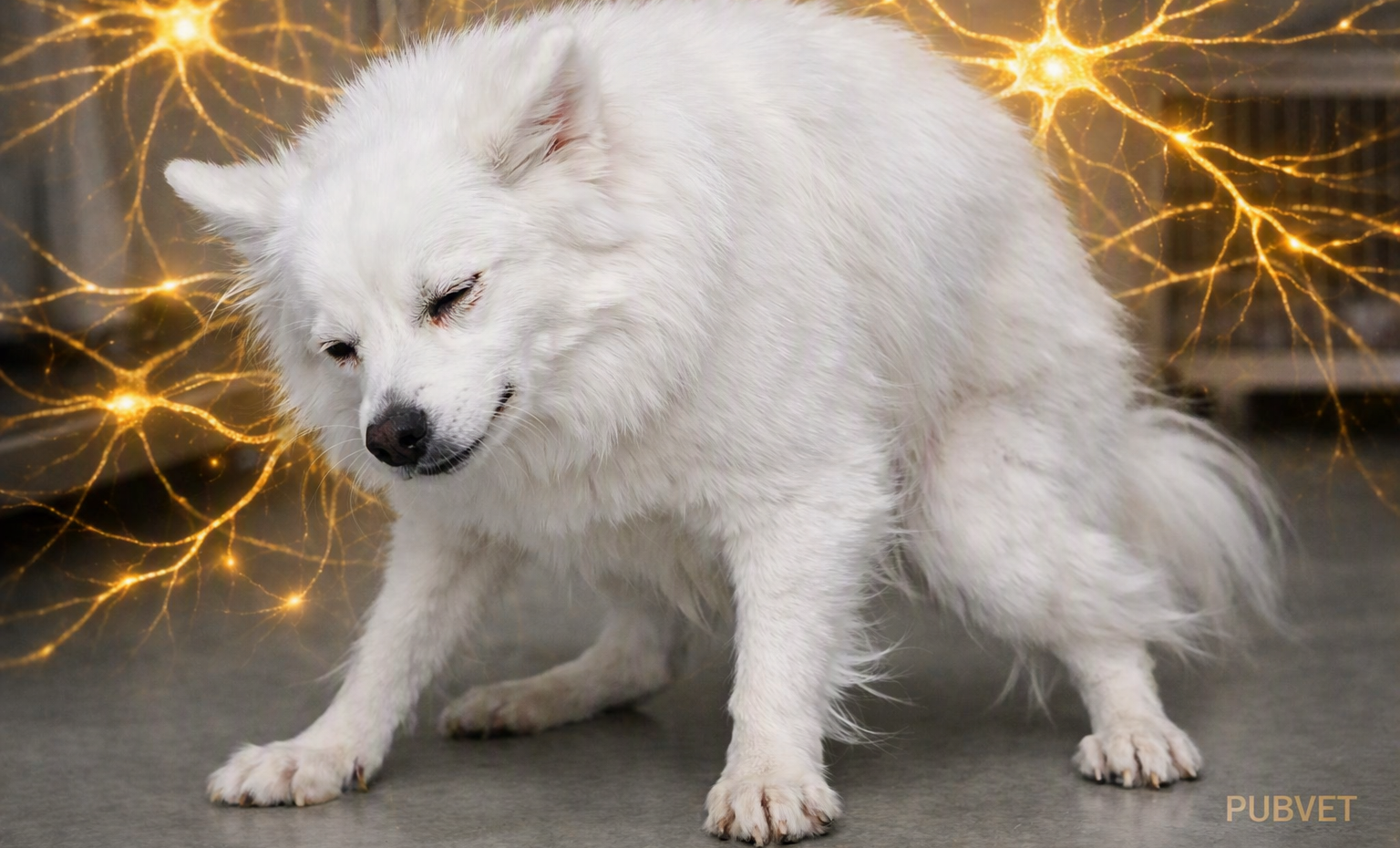
Idiopathic Generalized Tremor Syndrome (IGTS), also known as steroid responsive tremor syndrome, is a neurological disorder characterized by generalized, continuous, and non-progressive tremors that worsen during states of excitement and disappear during sleep. Although initially described in small, white-coated dogs, it is now recognized that it can affect animals of different breeds and sizes, and even cats, with a higher occurrence in young individuals and females. The etiology of IGTS remains unknown, but there is strong evidence of immune-mediated involvement, possibly associated with the production of neuronal autoantibodies and diffuse inflammatory processes in the central nervous system. Recent reports also suggest the participation of hormonal factors, as well as possible interactions with the gut-brain axis, broadening the perspective on its pathophysiology. The diagnosis is one of exclusion, based on clinical evaluation, complementary exams such as magnetic resonance imaging and cerebrospinal fluid analysis, and a favorable response to treatment with immunosuppressive doses of corticosteroids. Prognosis is good; however, relapses can occur, requiring therapeutic adjustments. Thus, this study aims to conduct a literature review to elucidate new perspectives and findings, as well as knowledge gaps regarding the syndrome. Despite advances in the clinical recognition and management of IGTS, its pathophysiology remains unknown, highlighting the need for a better understanding of the mechanisms involved and the development of more specific diagnostic and therapeutic approaches.
References
Aguilera-Padros, A., Kelley, M., Dancer, S., Khan, Z., & Suñol, A. (2023). Suspected pregnancy-associated meningoencephalitis of unknown origin in a dog. Veterinary Record Case Reports, 11(4), e702. https://doi.org/10.1002/vrc2.702.
Bagley, R. S. (1992). Tremor syndromes in dogs: Diagnosis and treatment. Journal of Small Animal Practice, 33(10), 485–490. https://doi.org/10.1111/j.1748-5827.1992.tb01030.x.
Bastos, N. F. F. (2021). Discinesia paroxística em cães. Escola Universitária Vasco da Gama.
Benakis, C., Martin-Gallausiaux, C., Trezzi, J. P., Melton, P., Liesz, A., & Wilmes, P. (2020). The microbiome-gut-brain axis in acute and chronic brain diseases. Current Opinion in Neurobiology, 61, 1–9. https://doi.org/10.1016/j.conb.2019.11.009.
Cerda-Gonzalez, S., Packer, R. A., Garosi, L., Lowrie, M., Mandigers, P. J. J., O’Brien, D. P., & Volk, H. A. (2021). International veterinary canine dyskinesia task force ECVN consensus statement: Terminology and classification. Journal of Veterinary Internal Medicine, 35(3). https://doi.org/10.1111/jvim.16108.
Conceição, R. T., Flaiban, K. K. M. C., Guimarães, F. C., & Arias, M. V. B. (2019). Análise do líquido cérebro-espinhal em cães e gatos com afecções neurológicas. Acta Scientiae Veterinarea, 47, 1704.
Cornelis, I., van Ham, L., Gielen, I., Decker, S., & Bhatti, S. F. M. (2013). Presumptive immune-mediated meningoencephalomyelitis in dogs: survey of diagnostic findings and outcome. Journal of Veterinary Internal Medicine, 27, 1166–1173. https://doi.org/10.1111/jvim.12026.
De Lahunta, A., Glass, E., & Kent, M. (2020). De Lahunta’s Veterinary neuroanatomy and clinical neurology. In de Lahunta’s Veterinary Neuroanatomy and Clinical Neurology, Fifth Edition.
Elkon, K., & Casali, P. (2008). Nature and functions of autoantibodies. Nature Clinical Practice Rheumatology, 4(9), 491–498. https://doi.org/10.1038/ncprheum0895.
Fang, B., McKeon, A., Hinson, S. R., Kryzer, T. J., Pittock, S. J., Aksamit, A. J., & Lennon, V. A. (2016). Autoimmune glial fibrillary acidic protein astrocytopathy: A novel meningoencephalomyelitis. JAMA Neurology, 73(11), 1297–1307. https://doi.org/10.1001/jamaneurol.2016.2549.
Fernandez, Y., Sharman, M. J., & Seth, M. (2020). Pregnancy-associated immune-mediated hemolytic anemia in a dog. Journal of Veterinary Emergency and Critical Care, 30(3), 719–722. https://doi.org/10.1111/vec.12951.
Forsyth, K. S., Jiwrajka, N., Lovell, C. D., Toothacre, N. E., & Anguera, M. C. (2024). The conneXion between sex and immune responses. Nature Reviews Immunology, 24(7), 487–502. https://doi.org/10.1038/s41577-024-00996-9.
Freitas, D. M., Alves, L. C., Alves, E. G. L., & Rosado, I. R. (2019). Corticosteroid responsive tremor syndrome associated with estrus in a female dog. Acta Scientiae Veterinariae, 47, 382. https://doi.org/10.22456/1679-9216.91579.
Fung, T. C. (2020). The microbiota-immune axis as a central mediator of gut-brain communication. Neurobiology of Disease, 136, 104714. https://doi.org/10.1016/j.nbd.2019.104714.
Granger, N., Smith, P. M., & Jeffery, N. D. (2010). Clinical findings and treatment of non-infectious meningoencephalomyelitis in dogs: A systematic review of 457 published cases from 1962 to 2008. Veterinary Journal, 184(3), 290–297. https://doi.org/10.1016/j.tvjl.2009.03.031.
Hazell, K. L. A., Child, G., & Chin, G. (2011). Clinical characteristics and outcome after treatment of shaker dog syndrome in 90 dogs. Australian Veterinary Practitioner, 41(4), 167–171.
Hemmeter, L., Bien, C. G., Bien, C. I., Tipold, A., Neßler, J., Bathen-Nöthen, A., Matiasek, K., Dahlhoff, M., Rusbridge, C., Black, C. R., Rentmeister, K., Volk, H. A., & Fischer, A. (2023). Investigation of the presence of specific neural antibodies in dogs with epilepsy or dyskinesia using murine and human assays. Journal of Veterinary Internal Medicine, 37(4), 1409–1417. https://doi.org/10.1111/jvim.16744.
Huenerfauth, E. I., Bien, C. G., Bien, C., Volk, H. A., & Meyerhoff, N. (2022). Case Report: Anti-GABAA Receptor Encephalitis in a Dog. Frontiers in Veterinary Science, 9, 886711. https://doi.org/10.3389/fvets.2022.886711.
Jericó, M. M., Andrade Neto, J. P., & Kogika, M. M. (2015). Tratado de medicina interna de cães e gatos. Roca Ltda.
Kajin, F., Meyerhoff, N., Meller, S., Carlson, R., Tipold, A., Gutierrez-Quintana, R., Kaczmarska, A., Sanchez-Masian, D., Ives, E., Brocal, J., von Klopmann, T., Hauer, J., & Volk, H. A. (2024). Canine idiopathic generalized tremor syndrome, immune-mediated? Frontiers in Veterinary Science, 11. https://doi.org/10.3389/fvets.2024.1453698.
Kim, S., Kim, Y., Kim, J. H., Kim, H. J., Lee, J. H., Geum, M., & Kim, H. J. (2021). Long-term management of a refractory corticosteroid responsive tremor syndrome. Journal of Veterinary Clinics, 38(3), 143–146. https://doi.org/10.17555/jvc.2021.38.3.143.
Lavezzo, M. M., Sakata, V. M., Morita, C., Rodriguez, E. E. C., Abdallah, S. F., Silva, F. T. G., Hirata, C. E., & Yamamoto, J. H. (2016). Vogt-Koyanagi-Harada disease: Review of a rare autoimmune disease targeting antigens of melanocytes. Orpha net Journal of Rare Diseases, 11(1), 29. https://doi.org/10.1186/s13023-016-0412-4.
Liatis, T., Bhatti, S. F. M., & Decker, S. (2024). Clinical approach of tremors in dogs and cats. Vlaams Diergeneeskundig Tijdschrift, 93(4). https://doi.org/10.21825/vdt.91618.
Liatis, T., Bhatti, S. F. M., & Decker, S. (2025). Generalized Tremors in Dogs: 198 Cases (2003–2023). Journal of Veterinary Internal Medicine, 39(3), e70062. https://doi.org/10.1111/jvim.70062.
Lowrie, M. (2021). Guide to tremor and twitch syndromes in dogs and cats. In Practice, 43(1), 4–17. https://doi.org/10.1002/inpr.3.
Matsuki, N., Fujiwara, K., Tamahara, S., Uchida, K., Matsunaga, S., Nakayama, H., Doi, K., Ogawa, H., & Ono, K. (2004). Prevalence of autoantibody in cerebrospinal fluids from dogs with various CNS diseases. Journal of Veterinary Medical Science, 66(3), 295–297. https://doi.org/10.1292/jvms.66.295.
Mauler, D. A., Van Soens, I., Bhatti, S. F., Cornelis, I., Martlé, V. A., & Van Ham, L. M. (2014). Idiopathic generalised tremor syndrome in two cats. Journal of Feline Medicine and Surgery, 16(4), 378–380. https://doi.org/10.1177/1098612X13503649.
Mayhew, J. (2009). Tetany, tremor and postural and movement disorders. 1th International Congress of World Equine Veterinary Association.
Miller, S. A., Hohenhaus, A. E., & Hale, A. S. (2004). Case-control study of blood type, breed, sex, and bacteremia in dogs with immune-mediated hemolytic anemia. Journal of the American Veterinary Medical Association, 224(2), 232–235. https://doi.org/10.2460/javma.2004.224.232.
Monteiro, S. R. M., Risio, L., Alves, L., & Vanhaesebrouck, A. E. (2025). Usefulness of cerebrospinal fluid analysis in dogs and cats with suspected intracranial disease and normal magnetic resonance imaging. Frontiers in Veterinary Science, 12. https://doi.org/10.3389/fvets.2025.1583988.
Oliveira, A. M., Faller, K., & Madden, M. (2025). Association between steroid-responsive meningitis-arteritis and gastrointestinal signs in dogs: a case-control study. Journal of the American Veterinary Medical Association, 263(9). https://doi.org/10.2460/javma.25.02.0119.
Pessoa, C. R. M., Medeiros, R. M. T., Pessoa, A. F. A., Dantas, A. F. M., Oliveira, O. F., & Riet-Correa, F. (2010). Doença tremorgênica em ruminantes e equídeos no semiárido da Paraíba. Pesquisa Veterinária Brasileira, 30, 541–546. https://doi.org/10.1590/S0100-736X2010000700005.
Phillipps, S., Decker, S., Gutierrez-Quintana, R., Alcoverro, E., Gomes, S. A., & Goncalves, R. (2022). Idiopathic generalised tremor syndrome in dogs. Veterinary Record, 191(9), e1734. https://doi.org/10.1002/vetr.1734.
Prüss, H., Leubner, J., Wenke, N. K., Czirják, G. A., Szentiks, C. A., & Greenwood, A. D. (2015). Anti-NMDA Receptor Encephalitis in the Polar Bear (Ursus maritimus) Knut. Scientific Reports, 5, 12805. https://doi.org/10.1038/srep12805.
Radulescu, S. M., Humm, K., Eramanis, L. M., Volk, H. A., Church, D. B., Brodbelt, D., & O’Neill, D. G. (2020). Vestibular disease in dogs under UK primary veterinary care: Epidemiology and clinical management. Journal of Veterinary Internal Medicine, 34(5), 1993–2004. https://doi.org/10.1111/jvim.15869.
Seidel, E. H. D., Ororbia, A., Tang, C., & Posporis, C. (2025). Concurrent idiopathic generalised tremor syndrome and bilateral trigeminal neuropathy in a dog (Canis lupus familiaris). Veterinary Record Case Reports, 13(4), e70199. https://doi.org/10.1002/vrc2.70199.
Summers, B. A., Cummings, J. F., & De Lahunta, A. (1995). Veterinary Neuropathology. Mosby-Year Book. Mosby Year Book.
Uchida, K., Hasegawa, T., Ikeda, M., Yamaguchi, R., & Tateyama, S. (1999). Detection of an autoantibody from pug dogs with necrotizing encephalitis (pug dog encephalitis). Veterinary Pathology, 36(4), 301–307. https://doi.org/10.1354/vp.36-4-301.
van den Heuvel, M., Plonek, M., Carrera, I., & Santifort, K. M. (2025). Meningoencephalitis of unknown origin following a diagnosis of idiopathic generalised tremor syndrome in a dog. Veterinary Record Case Reports, 13(3), e70124. https://doi.org/10.1002/vrc2.70124.
Van Samkar, A., Poulsen, M. N. F., Bienfait, H. P., & Van Leeuwen, R. B. (2017). Acute cerebellitis in adults: A case report and review of the literature. BMC Research Notes, 10(1), 610. https://doi.org/10.1186/s13104-017-2935-8.
Viana, M. C. E., Pariz, L. O., Mendes, M. F. A., & Verzola, L. F. S. (2025). Distúrbios neurológicos paraneoplásicos: Uma revisão de literatura. Aracê, 7(7), 35224–35237. https://doi.org/10.56238/arev7n7-005.
Voskuhl, R. R. (2020). The effect of sex on multiple sclerosis risk and disease progression. Multiple Sclerosis Journal, 26(5), 554–560. https://doi.org/10.1177/1352458519892491.
Wagner, S. O., Podell, M., & Fenner, W. R. (1997). Generalized tremors in dogs: 24 cases (1984-1995). Journal of the American Veterinary Medical Association, 211(6), 731–735. https://doi.org/10.2460/javma.1997.211.06.731.
Willemse, T. W. J., Lamb, V., & Kelly, D. (2019). Pregnancy-associated immune-mediated polyarthritis in a dog. Veterinary Record Case Reports, 7(4), E000769. https://doi.org/10.1136/vetreccr-2018-000769.
Yamaya, Y., Iwakami, E., Goto, M., Koie, H., Watari, T., Tanaka, S., Takeuchi, A., & Tokuriki, M. (2004). A case of shaker dog disease in a miniature Dachshund. Journal of Veterinary Medical Science, 66(9), 1159–1160. https://doi.org/10.1292/jvms.66.1159.
Yao, Q., Li, Z., Xu, M., Jiang, Y., Wang, J., Wang, H., Yu, D., & Yin, S. (2022). The Spectrum of Vestibular Disorders Presenting with Acute Continuous Vertigo. Frontiers in Neuroscience, 16, 933520. https://doi.org/10.3389/fnins.2022.933520.
Downloads
Published
Issue
Section
License
Copyright (c) 2026 Alessandra Saad Torres Monteiro, Gabrielly Aparecida Gonzaga de Oliveira, Nicolly Martins Rodrigues, Thalita Oliveira Cucki

This work is licensed under a Creative Commons Attribution 4.0 International License.
Você tem o direito de:
Compartilhar — copiar e redistribuir o material em qualquer suporte ou formato
Adaptar — remixar, transformar, e criar a partir do material para qualquer fim, mesmo que comercial.
O licenciante não pode revogar estes direitos desde que você respeite os termos da licença. De acordo com os termos seguintes:
Atribuição
— Você deve dar o crédito apropriado, prover um link para a licença e indicar se mudanças foram feitas. Você deve fazê-lo em qualquer circunstância razoável, mas de nenhuma maneira que sugira que o licenciante apoia você ou o seu uso. Sem restrições adicionais
— Você não pode aplicar termos jurídicos ou medidas de caráter tecnológico que restrinjam legalmente outros de fazerem algo que a licença permita.