Use of progesterone in vitro fertilization as a sustainable advancement for ovine embryo production
DOI:
https://doi.org/10.31533/pubvet.v19n10e1852Keywords:
Animal reproduction, in vitro fertilization, reproductive biotechnology, sustainable sheep farming, sperm capacitationAbstract
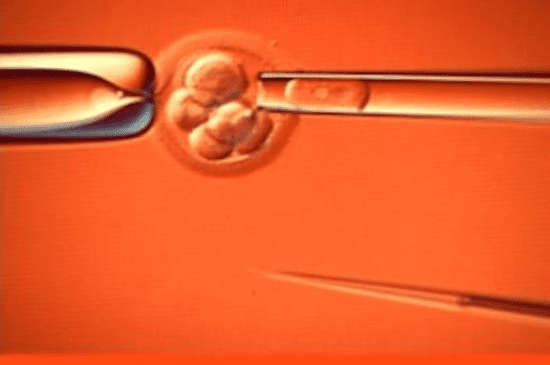
In vitro embryo production (IVEP) offers several benefits for sheep farming. However, achieving optimal results with this biotechnology typically requires the use of estrous ewe serum (EES), a product obtained in the field that is neither standardized nor commercially available. One potential alternative is the use of the hormone progesterone (P4), which has demonstrated positive effects on sperm capacitation and may therefore enhance IVEP outcomes. This study aimed to compare the supplementation of in vitro fertilization (IVF) media with EES and P4, and to evaluate the resulting in vitro production of sheep embryos. The experiment was conducted at the UniCesumar Biotechnology Center in Maringá, Paraná (Brazil). Cumulus-oocyte complexes were obtained from ovaries collected at slaughterhouses from 100 prepubertal females and matured in a commercial medium. Fertilization was performed in an IVF medium supplemented with either 10% EES (control group: IVF-EES) or 1 µL/mL (0.1%) of P4 (test group: IVF-P4). Spermatozoa were incubated in the medium for 1 hour prior to co-incubation with the oocytes. Subsequently, zygotes were cultured in vitro in a gas mixture of 90% N₂, 5% CO₂, and 5% O₂. Embryo development was assessed on days 2, 7 and 10 of culture. Data were tabulated and analyzed using the PROC GENMOD procedure. The oocyte maturation rate was 68%, with an average of 1.53 viable oocytes per animal. The IVF-P4 group showed higher (P < 0.05) cleavage rates (43.89% vs. 26.66%), blastocyst formation (24.44% vs. 14.44%), and hatched blastocysts (50% vs. 11.11%) compared to the IVF-EES group. In conclusion, supplementation of IVF media with progesterone enhances the efficiency and sustainability of IVEP in sheep.
References
Albesa, M. B., Pe, R. P., & Jiménez, S. M. (2022). Estudio de la activación del canal de calcio CatSper en espermatozoides ovinos. Faculdad de c Ciencias y Universidad de Zaragoza.
Barrera, N., Santos Neto, P. C., Cuadro, F., Bosolasco, D., Mulet, A. P., Crispo, M., & Menchaca, A. (2018). Impact of delipidated estrous sheep serum supplementation on in vitro maturation, cryotolerance and endoplasmic reticulum stress gene expression of sheep oocytes. PLoS ONE, 13(6). https://doi.org/10.1371/journal.pone.0198742.
Barros, V. R. P., Monte, A. P. O., Santos, J. M. S., Lins, T. L. B. G., Cavalcante, A. Y. P., Gouveia, B. B., Müller, M. C., Oliveira Junior, J. L., Barberino, R. S., Donfack, N. J., Araújo, V. R., & Matos, M. H. T. (2020). Effects of melatonin on the in vitro growth of early antral follicles and maturation of ovine oocytes. Domestic Animal Endocrinology, 71, 1–8. https://doi.org/10.1016/j.domaniend.2019.106386.
Baruselli, P. S., Abreu, L. Â., Catussi, B. L. C., Santos, G. F. F., Factor, L., Felisbino, A. R., Frigoni, F. G., & Crepaldi, G. A. (2021). Mitos e realidades sobre a inseminação artificial em tempo fixo (IATF) em bovinos de corte. Revista Brasileira de Reprodução Animal, 45(4). https://doi.org/10.21451/1809-3000.rbra2021.083.
Basso, C. A., Martins, J. F. P., Ferreira, C. R., Ereno, A., Tannura, J., Tabet, A., Figueiredo, C. L., Oliveira, P. C., & Pontes, J. H. F. (2008). Produção in vitro de embriões ovinos: Aspectos da técnica de aspiração folicular e do tratamento hormonal de doadoras. O Embrião, 38, 8–11.
Bernardi, M. L. (2018). Produção in vitro de embriões ovinos. Acta Scientiae Veterinariae, 33(1). https://doi.org/10.22456/1679-9216.14418.
Bernecic, N. C., Graaf, S. P., Leahy, T., & Gadella, B. M. (2021). HDL mediates reverse cholesterol transport from ram spermatozoa and induces hyperactivated motility. Biology of Reproduction, 104(6). https://doi.org/10.1093/biolre/ioab035.
BRASIL. Ministério da Agricultura, Pecuária e Abastecimento (MAPA). Brasil amplia exportação de material genético animal para o Paraguai. Nota conjunta MAPA-MRE, 2023. Disponível em: https://www.gov.br/agricultura/pt-br/assuntos/noticias/brasil-amplia-exportacao-de-material-genetico-animal-para-o-paraguai, acesso em 06 de julho de 2025.
Bueno, A. P., & Paula, B. M. (2008). Produção in vitro de embriões bovinos. Revista Cientifica Eletrônica de Medicina Veterinária, 6(11), 1–7.
Casao, A., Gimene-Martos, S., Abecia, J. A., Cebrian-Pérez, J. A., Muiño-Blanco, T., & Pérez-Pé, R. (2017). 17-β-Estradiol and progesterone effect on ram sperm capacitation and fertilizing ability. XVII Jornadas Sobre Producción Animal de La Associacion Interprofessional Por El Desarrollo Animal (AIDA). https://doi.org/10.5380/avs.v22i1.50814.
Castilho, C., Almeida, M. F., Costa, M. Z., Cesare, Â. G., & Gabriel Filho, L. R. A. (2013). Protocolos de indução e sincronização do estro em ovelhas. Ciência Animal Brasileira, 14(1), 91–97.
Colombo, A. H. B., Cavalieri, F. L. B., Andreazzi, M. A., Moreski, D. A. B., Botelho, A. C. F. A., & Santos, J. M. G. (2017). Evaluation of biotechnics of reproduction under the environmental focus. Archives of Vaterinary Science, 22(1), 81–89.
Emiliozzi, C., Cordonier, H., Guérin, J. F., Ciapa, B., Benchaïb, M., & Fénichel, P. (1996). Effects of progesterone on human spermatozoa prepared for in-vitro fertilization. International Journal of Andrology, 19(1), 39–47. https://doi.org/10.1111/j.1365-2605.1996.tb00433.x.
Falchi, L., Ledda, S., & Zedda, M. T. (2022). Embryo biotechnologies in sheep: Achievements and new improvements. Reproduction in Domestic Animals, 57(S5), 22–33. https://doi.org/10.1111/rda.14127.
Ferrer-Roda, M., Izquierdo, D., Gil, A., Oliveira, M. E. F., & Paramio, M.-T. (2024). Oocyte competence of prepubertal sheep and goat oocytes: An assessment of large-scale chromatin configuration and epidermal growth factor receptor expression in oocytes and cumulus cells. International Journal of Molecular Sciences, 25(8), 4474. https://doi.org/10.3390/ijms25084474
Fonseca, J. F., Cruz, R. C., Oliveira, M. E. F., Souza-Fabjan, J. M. G., & Viana, J. H. M. (2014). Biotecnologias aplicadas à reprodução de ovinos e caprinos. EMBRAPA, 1(1).
Fonseca, J. F., Souza-Fabjan, J. M. G., Oliveira, M. E. F., Leite, C. R., Nascimento-Penido, P. M. P., Brandão, F. Z., & Lehloenya, K. C. (2016). Nonsurgical embryo recovery and transfer in sheep and goats. Theriogenology, 86(1), 144–151. https://doi.org/10.1016/j.theriogenology.2016.04.025.
García-Álvarez, O., Maroto-Morales, A., Jiménez-Rabadán, P., Ramón, M., Olmo, E., Iniesta-Cuerda, M., Anel-López, L., Fernández-Santos, M. R., Garde, J. J., & Soler, A. J. (2015). Effect of different media additives on capacitation of frozen-thawed ram spermatozoa as a potential replacement for estrous sheep serum. Theriogenology, 84(6), 948–955. https://doi.org/10.1016/j.theriogenology.2015.05.032.
Gatica, L. V., Guidobaldi, H. A., Montesinos, M. M., Teves, M. E., Moreno, A. I., Uñates, D. R., Molina, R. I., & Giojalas, L. C. (2013). Picomolar gradients of progesterone select functional human sperm even in subfertile samples. Molecular Human Reproduction, 19(9), 559–569. https://doi.org/10.1093/molehr/gat037.
Gimeno-Martos, S., Casao, A., Yeste, M., Cebrián-Pérez, J. A., Muiño-Blanco, T., & Pérez-Pé, R. (2019). Melatonin reduces cAMP-stimulated capacitation of ram spermatozoa. Reproduction, Fertility and Development, 31(2), 420. https://doi.org/10.1071/RD18087.
Granleese, T., Clark, S. A., Kinghorn, B. P., & van der Werf, J. H. J. (2019). Optimizing female allocation to reproductive technologies considering merit, inbreeding and cost in nucleus breeding programmes with genomic selection. Journal of Animal Breeding and Genetics, 136(2). https://doi.org/10.1111/jbg.12374.
Hafez, B., & Hafez, E. S. E. (2004). Reprodução Animal (Vol. 1, p. 513). Manole: São Paulo, Brasil.
Li, K., Li, R., Ni, Y., Sun, P., Liu, Y., Zhang, D., & Huang, H. (2018). Novel distance-progesterone-combined selection approach improves human sperm quality. Journal of Translational Medicine, 16(1). https://doi.org/10.1186/s12967-018-1575-7.
Lustosa, A. A., Barboza, N. A., Barbosa, Y. G. S., Rodrigues, P. K. O., & Magalhães Neto, F. C. R. (2018). Aspectos relevantes na produção comercial de embriões bovinos por meio da técnica biotecnológica de fertilização in vitro: Revisão. PUBVET, 12(3), 1–6. https://doi.org/10.22256/pubvet.v12n3a51.1-6.
Max, M. C. (2011). Produção in vitro de embriões na espécie ovina: efeito do benzoato de estradiol na aspiração folicular e transporte de gametas e embriões em longas distâncias. Universidade Estadual de Londrina.
Mello, R., Ferreira, J., Sousa, S., Mello, M., & Palhano, H. (2016). Produção in vitro (PIV) de embriões em bovinos. Revista Brasileira de Reprodução Animal, 40(2).
Pena, A. S., Cavalheiro, B. L., Maffi, M. M., Riani, E., & Longo, S. (2022). Cellular and molecular events that occur in the oocyte during prolonged ovarian storage in sheep. Animals, 10(12), 2414. https://doi.org/10.3390/ani10122414
Pontes, J. H. F., Silva, K. C. F., Basso, A. C., Rigo, A. G., Ferreira, C. R., Santos, G. M. G., Sanches, B. V., Porcionato, J. P. F., Vieira, P. H. S., Faifer, F. S., Sterza, F. A. M., Schenk, J. L., & Seneda, M. M. (2010). Large-scale in vitro embryo production and pregnancy rates from Bos taurus, Bos indicus, and indicus-taurus dairy cows using sexed sperm. Theriogenology, 74(8), 1349–1355. https://doi.org/10.1016/j.theriogenology.2010.06.004.
Ptak, G., Tischner, M., Bernabò, N., & Loi, P. (2003). Donor-dependent developmental competence of oocytes from lambs subjected to repeated hormonal stimulation. Biology of Reproduction, 69(1), 278–285. https://doi.org/10.1095/biolreprod.102.011312.
Rocha-Frigoni, N. A. S., Leão, B. C. S., Feliciano, M. A. R., Vicente, W. R. R., & Oliveira, M. E. F. (2014). Produção in vitro de embriões ovinos: Avanços e desafios. Revista Brasileira de Produção Animal, 38(2), 103109.
Romão, R., Marques, C. C., Baptista, M. C., Vasques, M. I., Barbas, J. P., Horta, A. E. M., Carolino, N., Bettencourt, E., Plancha, C., Rodrigues, P., & Pereira, R. M. (2013). Evaluation of two methods of in vitro production of ovine embryos using fresh or cryopreserved semen. Small Ruminant Research, 110(1), 36–41. https://doi.org/10.1016/j.smallrumres.2012.07.029.
Sánchez-Ajofrín, I., Peris-Frau, P., García-Álvarez, O., Fernández-Santos, M. R., Montoro, V., Garde, J. J., & Soler, A. J. (2022). Serum supplementation during in vitro fertilization of sheep oocytes influences blastocyst quality through the differential abundance of mRNA transcripts. Reproduction in Domestic Animals, 57(Suppl 5), 68–71. https://doi.org/10.1111/rda.14161
Santos, F. C. C., & Barcelos, R. A. D. (2012). Eficiência de protocolos de sincronização de estro em ovelhas. Revista Brasileira de Reprodução Animal, 36(3), 202–205.
SAS® - Statisticl Analysis System. OnDemand for Academics, 2024 (on-line).
Simplício, A. A., Freitas, V. J. F., & Fonseca, J. F. (2007). Biotécnicas da reprodução como técnicas de manejo reprodutivo em ovinos. Revista Brasileira de Reprodução Animal, 31(2), 234–246.
Souza-Fabjan, J. M. G., Leal, G. R., Monteiro, C. A. S., Batista, R. I. T. P., Barbosa, N. O., & Freitas, V. J. F. (2023). In vitro embryo production in small ruminants: what is still missing? Animal Reproduction, 20(3), e20230055. https://doi.org/10.1590/1984-3143-AR2023-0055.
Stringfellow, D. A. & Seidel, S. M. (1999). Manual da Sociedade Internacional de Transferência de Embriões. 3.ed. [S.l.]: Sociedade Brasileira de Transferência de Embriões, 180p.
Suzuki, R. & Fujinoki, M. (2023). Progesterone increases the success of in vitro fertilization via enhanced sperm hyperactivation in mice. Journal of Reproduction and Development, 69(3), 147-153. https://doi.org/10.1262/jrd.2022-114
Takada, L., Bicudo, S. D., Rodrigues, C. F. C., Coelho, L. A., & Perri, S. H. V. (2009). Sincronização do estro e da ovulação utilizando protocolos de curta duração durante a pré-estação reprodutiva em ovelhas Suffolk. Acta Scientiarum. Animal Sciences, 31(4), 453–460.
Traldi, A. S. (2009). Produção in vitro de embriões de ovinos: Uma visão crítica do método e de seu resultado a campo. Revista Brasileira de Zootecnia, 38(SUPPL. 1). https://doi.org/10.1590/S1516-35982009001300030.
Wrenzycki, C. (2016). Sistemas de cultivo in vitro: quão longe estamos das condições ideais? Anais Da Reunião Anual da Sociedade Brasileira de Tecnologia de Embriões, 155–159.
Zhu, J., Moawad, A. R., Wang, C. Y., Li, H. F., Ren, J. Y., & Dai, Y. F. (2018). Advances in in vitro production of sheep embryos. International Journal of Veterinary Science and Medicine, 6, 15–26. https://doi.org/10.1016/j.ijvsm.2018.02.003.
Downloads
Published
Issue
Section
License
Copyright (c) 2025 Rafaeli Fagá Daniel, Fábio Luiz Bim Cavalieri, Isabele Picada Emanuelli, Danieli Aparecida Bóbbo Moreski, Marcia Aparecida Andreazzi, Raquel Zaneti Puelker, José Maurício Gonçalves dos Santos, Iamara Carvalho Sabatino Bento, Antonio Hugo Bezerra Colombo

This work is licensed under a Creative Commons Attribution 4.0 International License.
Você tem o direito de:
Compartilhar — copiar e redistribuir o material em qualquer suporte ou formato
Adaptar — remixar, transformar, e criar a partir do material para qualquer fim, mesmo que comercial.
O licenciante não pode revogar estes direitos desde que você respeite os termos da licença. De acordo com os termos seguintes:
Atribuição
— Você deve dar o crédito apropriado, prover um link para a licença e indicar se mudanças foram feitas. Você deve fazê-lo em qualquer circunstância razoável, mas de nenhuma maneira que sugira que o licenciante apoia você ou o seu uso. Sem restrições adicionais
— Você não pode aplicar termos jurídicos ou medidas de caráter tecnológico que restrinjam legalmente outros de fazerem algo que a licença permita.