Nocturnal census of free-roaming cats using UAV-based aerial thermography at Saudade municipal cemetery, Piracicaba, São Paulo
DOI:
https://doi.org/10.31533/pubvet.v20n9e2009Keywords:
Population census, population density, urban ecology, Aerial thermographyAbstract
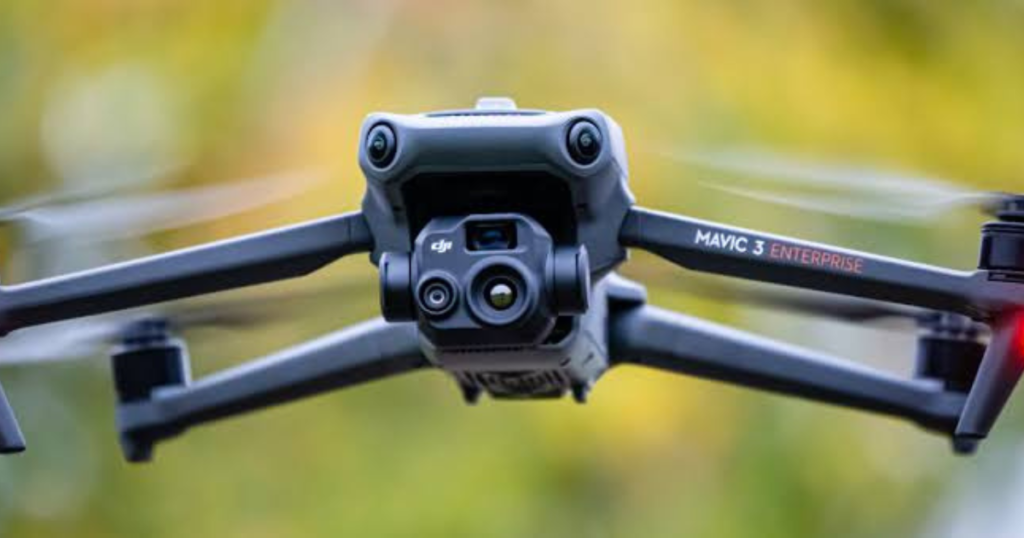
The growth of free-roaming cat (Felis catus) populations in urban environments poses significant challenges to biodiversity conservation, public health, and animal welfare, highlighting the need for reliable methods to estimate population size and support management policies. This study evaluated the application of unmanned aerial vehicle (UAV)-based thermal imaging for the nocturnal census of free-roaming cats at the Cemitério Municipal da Saudade, Piracicaba, São Paulo, Brazil, a 14.5-ha area characterized by a heterogeneous landscape structure. Four nighttime survey flights were conducted in July 2026 (July 1, 3, 13, and 29) at an altitude of 30 m using a radiometric thermal sensor (640 × 512 pixels) with 70% image overlap. The resulting dataset, comprising more than 16 GB of imagery, was analyzed manually on a frame-by-frame basis. Individuals were identified according to silhouette morphology, radiometric contrast, and movement patterns, followed by the removal of duplicate detections. Counts ranged from 86 to 136 individuals per survey (mean = 109.25 ± 24.54), corresponding to a mean density of 7.53 individuals/ha and a minimum detected population of 136 cats on July 29. The findings indicate that UAV-based thermal imaging combined with systematic human image interpretation is capable of documenting the presence and estimating the minimum size of the free-roaming cat population within the cemetery. However, estimates of total abundance require modeling of imperfect detectability and complementary ground-based validation. The proposed protocol demonstrates strong potential for replication in other urban green spaces, providing objective information to support ethical management strategies for synanthropic animal populations.
References
Augustine, B. C., Royle, J. A., Murphy, S. M., Chandler, R. B., Cox, J. J., & Kelly, M. J. (2019). Spatial capture–recapture for categorically marked populations with an application to genetic capture–recapture. Ecosphere, 10(4). https://doi.org/10.1002/ecs2.2627.
Bengsen, A., Butler, J., & Masters, P. (2011). Estimating and indexing feral cat population abundances using camera traps. Wildlife Research, 38(8), 732–739. https://doi.org/10.1071/WR11134.
Bradfield, A., Nagy, C., Weckel, M., Lahti, D. C., & Habig, B. (2025). Cats in the city: urban cat distribution is influenced by habitat characteristics, anthropogenic factors, and the presence of coyotes. Urban Ecosystems, 28(3). https://doi.org/10.1007/s11252-025-01709-3.
Burke, C., Rashman, M., Wich, S., Symons, A., Theron, C., & Longmore, S. (2019). Optimizing observing strategies for monitoring animals using drone-mounted thermal infrared cameras. International Journal of Remote Sensing, 40(2), 439–467. https://doi.org/10.1080/01431161.2018.1558372.
Carmo, A. L. A. (2025). Biodiversidade em risco: o impacto de gatos domésticos sobre a fauna silvestre em parque urbano [Dissertação de Mestrado]. Universidade Federal de Minas Gerais.
Chang, B., Hwang, B., Lim, W., Kim, H., Kang, W., Park, Y. S., & Ko, D. W. (2025). Enhancing Wildlife Detection Using Thermal Imaging Drones: Designing the Flight Path. Drones, 9(1), Art.52. https://doi.org/10.3390/drones9010052.
Dantas, L. M. S. (2010). Comportamento social de gatos domésticos e sua relação com a clínica médica veterinária e o bem-estar animal. Universidade Federal Fluminense.
Doherty, T. S., Glen, A. S., Nimmo, D. G., Ritchie, E. G., & Dickman, C. R. (2016). Invasive predators and global biodiversity loss. Proceedings of the National Academy of Sciences of the United States of America, 113(40), 11261–11265. https://doi.org/10.1073/pnas.1602480113.
Fernandes, G. A., & Campos, L. M. L. (2021). A constituição dialética das significações e a formação de conceitos científicos sobre animais sinantrópicos. Investigações em Ensino de Ciências, 26(2). https://doi.org/10.22600/1518-8795.ienci2021v26n2p76.
Flockhart, D. T. T., & Coe, J. B. (2018). Community-level management of free-roaming cats: understanding the challenges of municipal interventions. Preventive Veterinary Medicine, 157, 50–57.
Gehrt, S. D., Wilson, E. C., Brown, J. L., & Anchor, C. (2013). Population Ecology of Free-Roaming Cats and Interference Competition by Coyotes in Urban Parks. PLoS ONE, 8(9). https://doi.org/10.1371/journal.pone.0075718.
Gerber, B. D., & Parmenter, R. R. (2015). Spatial capture-recapture model performance with known small-mammal densities. Ecological Applications, 25(3), 695–705. https://doi.org/10.1890/14-0960.1.
IGAC. (2018). Magna-Sirgas. Igac.
Kéry, M., Royle, J. A., Hallman, T., Robinson, W. D., Strebel, N., & Kellner, K. F. (2024). Integrated distance sampling models for simple point counts. Ecology, 105(5). https://doi.org/10.1002/ecy.4292.
Lepczyk, C. A. (2020). What is the status of free-roaming domestic cats in human landscapes. Biological Conservation, 248, Art. 108642.
McHugh, D., Hollanders, M., Legge, S., & Augustine, B. C. (2025). Estimating feral cat (Felis catus) population density in eastern Australia’s subtropical rainforest using spatial capture-recapture incorporating unidentified individuals. Wildlife Research, 52(2). https://doi.org/10.1071/WR24102.
Medina, F. M., Bonnaud, E., Vidal, E., Tershy, B. R., Zavaleta, E. S., Donlan, C. J., Keitt, B. S., Corre, M., Horwath, S. V., & Nogales, M. (2011). A global review of the impacts of invasive cats on island endangered vertebrates. Global Change Biology, 17(11), 3503–3510. https://doi.org/10.1111/j.1365-2486.2011.02464.x.
Norris, E. B. B., Edwards, W., & Laurance, S. G. W. (2026). Thermal drones for wildlife research in tropical forests: A review of best practices, challenges, and opportunities. Biodiversity and Conservation, 35(3). https://doi.org/10.1007/s10531-026-03285-0.
Pankratz, K. E., Ferris, K. K., Griffith, E. H., & Sherman, B. L. (2017). Uso de gabapentina oral de dose única para atenuar as respostas do medo em gatos da comunidade confinada em armadilhas em gaiolas: Um estudo de campo duplo-cego e controlado por placebo. Journal of Feline Medicine and Surgery, 20(6), 535–543. https://doi.org/10.1177/1098612X17719399.
PMP. (2023). Cemitérios públicos: história, formas de concessão, contatos e localização (Vol. 1, Number 1). Prefeitura Municipal de Piracicaba.
Rivera, M. (2001). Manejo comportamental em gatos domésticos. Universidade Estadual de São Paulo.
Royle, J. A., Chandler, R. B., Gazenski, K. D., & Graves, T. A. (2013). Spatial capture-recapture models for jointly estimating population density and landscape connectivity. Ecology, 94(2). https://doi.org/10.1890/12-0413.1.
Scholten, A. D. (2017). Particularidades comportamentais do gato doméstico. Universidade Federal do Rio Grande do Sul.
Sollmann, R., Gardner, B., & Belant, J. L. (2012). How does spatial study design influence density estimates from spatial capture-recapture models? PLoS ONE, 7(4), e34575. https://doi.org/10.1371/journal.pone.0034575.
Witt, R. R., Beranek, C. T., Howell, L. G., Ryan, S. A., Clulow, J., Jordan, N. R., Denholm, B., & Roff, A. (2020). Real-time drone derived thermal imagery outperforms traditional survey methods for an arboreal forest mammal. PLoS ONE, 15(11 November), 0242204. https://doi.org/10.1371/journal.pone.0242204.
Woods, M., McDonald, R. A., & Harris, S. (2003). Predation of wildlife by domestic cats Felis catus in Great Britain. Mammal Review, 33(2), 273–280. https://doi.org/10.1046/j.1365-2907.2003.00017.x.
Yiu, S. W., Suraci, J. P., Norbury, G., Glen, A. S., Peace, J. E., & Garvey, P. M. (2025). Problematic cats in urban reserves: Implications for native biodiversity and urban cat management. Global Ecology and Conservation, 60, 273–280. https://doi.org/10.1016/j.gecco.2025.e03584.
Downloads
Published
Issue
Section
License
Copyright (c) 2026 Maurício Etechebere

This work is licensed under a Creative Commons Attribution 4.0 International License.
Você tem o direito de:
Compartilhar — copiar e redistribuir o material em qualquer suporte ou formato
Adaptar — remixar, transformar, e criar a partir do material para qualquer fim, mesmo que comercial.
O licenciante não pode revogar estes direitos desde que você respeite os termos da licença. De acordo com os termos seguintes:
Atribuição
— Você deve dar o crédito apropriado, prover um link para a licença e indicar se mudanças foram feitas. Você deve fazê-lo em qualquer circunstância razoável, mas de nenhuma maneira que sugira que o licenciante apoia você ou o seu uso. Sem restrições adicionais
— Você não pode aplicar termos jurídicos ou medidas de caráter tecnológico que restrinjam legalmente outros de fazerem algo que a licença permita.