Influence of chromotherapy on blood pressure measurement in dogs
DOI:
https://doi.org/10.31533/pubvet.v20n7e1987Keywords:
animal welfare, blood pressure, chromotherapy, dogs, stressAbstract
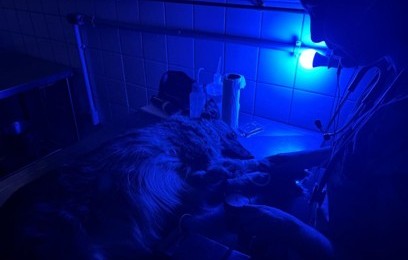
Blood pressure is an essential parameter in small animal practice and may be influenced by environmental and behavioral factors, such as the so-called "white coat syndrome." In this context, chromotherapy has emerged as a complementary approach capable of modulating stress-related physiological responses. This study evaluated the influence of white, blue, and green lights on the systolic blood pressure of 15 healthy dogs evaluated at the Veterinary Clinic of Universidade Castelo Branco between June 2024 and June 2025. Blood pressure was measured using the Doppler method under different lighting conditions, and the data were analyzed using analysis of variance (ANOVA) followed by Tukey's post hoc test. The results demonstrated that exposure to blue and green lights significantly reduced systolic blood pressure compared with white light (P < 0.01), suggesting a relaxing effect of these colors. No significant difference was observed between blue and green lights, although a trend toward lower blood pressure values was detected under green light. These findings suggest that chromotherapy has potential as a non-pharmacological therapeutic approach for stress management and blood pressure control in dogs, thereby contributing to animal welfare.
References
Dantzer, R., & Mormède, P. (1985). Stress in domestic animals: a psychoneuroendocrine approach. In Animal Stress (pp. 81–95). Springer.
Epstein, M. E. (2015). AAHA/AAFP pain management guidelines for dogs and cats. Journal of Feline Medicine and Surgery.
García, V. (2017). Luz azul: De las evidencias científicas a la atención al paciente. Points de Vue – International Review of Ophthalmic Optics.
Manzanaro, B. M. (2025). Luz verde. https://doi.org/10.18239/jornadas_2025.58.18.
Monsão, I. L., Souza, M. E., & Martini, T. C. (2025). Hospital do ursinho e a síndrome do jaleco branco: Um relato de experiência. Journal of Interprofessional Health Education, 2(1). https://doi.org/10.4025/jinterprofhealtheduc.v2i1.77417.
Silva, A. R. O. (2025). Luz e sombra. Revista Eletrônica de Estudos Integrados em Discurso e Argumentação, 25(3). https://doi.org/10.47369/eidea-25-3-4826.
Oliveira, N. D., Santos, J. C., & Harmuch, C. (2025). Prevenção da síndrome do jaleco branco: Relato de experiência. https://doi.org/10.46311/ed.un.20241022072.
Orsini, H., & Bondan, E. F. (2006). Fisiopatologia do estresse em animais selvagens em cativeiro e suas implicações no comportamento e bem-estar animal: Revisão da literatura. J. Health Sci. Inst, 24(1), 7–13.
Ossa, E., Lozano, P., & Sancho, Á. (2003). Cromoterapia el color y la salud. In Medicina Naturista.
Pellegrino, A., Petrus, L. C., Yamaki, F. L., Santos, A. L. F., & Larsson, M. H. M. A. (2010). Valores de pressão arterial de cães da raça Golden Retriever clinicamente sadios. Brazilian Journal of Veterinary Research and Animal Science, 47(4), 307–314.
Rinaldi, D. L., & Alberti, S. (2009). Psicanálise, saúde mental e universidade. Estudos e Pesquisas em Psicologia, 9(2), 533-545.
Salmerón, E. J. (2022). La luz azul: Peligros y beneficios. El Farmacéutico: Profesión y Cultura, (614).
Silva, J., Souza, F., & Lisbôa, R. (2015). Pressão arterial em cães atendidos em uma clínica veterinária na cidade de Manaus, AM, Brasil. PUBVET, 9(12), 521–525. https://doi.org/10.22256/pubvet.v9n12.521-525.
Silva, R. C., & Monteiro, C. F. (2006). Cromoterapia: um importante recurso terapêutico para a terapia ocupacional. X Encontro Latino-Americano de Iniciação Científica, 660–662.
Veissier, I., & Boissy, A. (2007). Stress and welfare: Two complementary concepts that are intrinsically related to the animal’s point of view. Physiology & Behavior, 92(3), 429–433. https://doi.org/10.1016/j.physbeh.2006.11.008.
Downloads
Published
Issue
Section
License
Copyright (c) 2026 Tatiana Vasconcelos Fernandes, Carolina do Valle Aben Athar

This work is licensed under a Creative Commons Attribution 4.0 International License.
Você tem o direito de:
Compartilhar — copiar e redistribuir o material em qualquer suporte ou formato
Adaptar — remixar, transformar, e criar a partir do material para qualquer fim, mesmo que comercial.
O licenciante não pode revogar estes direitos desde que você respeite os termos da licença. De acordo com os termos seguintes:
Atribuição
— Você deve dar o crédito apropriado, prover um link para a licença e indicar se mudanças foram feitas. Você deve fazê-lo em qualquer circunstância razoável, mas de nenhuma maneira que sugira que o licenciante apoia você ou o seu uso. Sem restrições adicionais
— Você não pode aplicar termos jurídicos ou medidas de caráter tecnológico que restrinjam legalmente outros de fazerem algo que a licença permita.