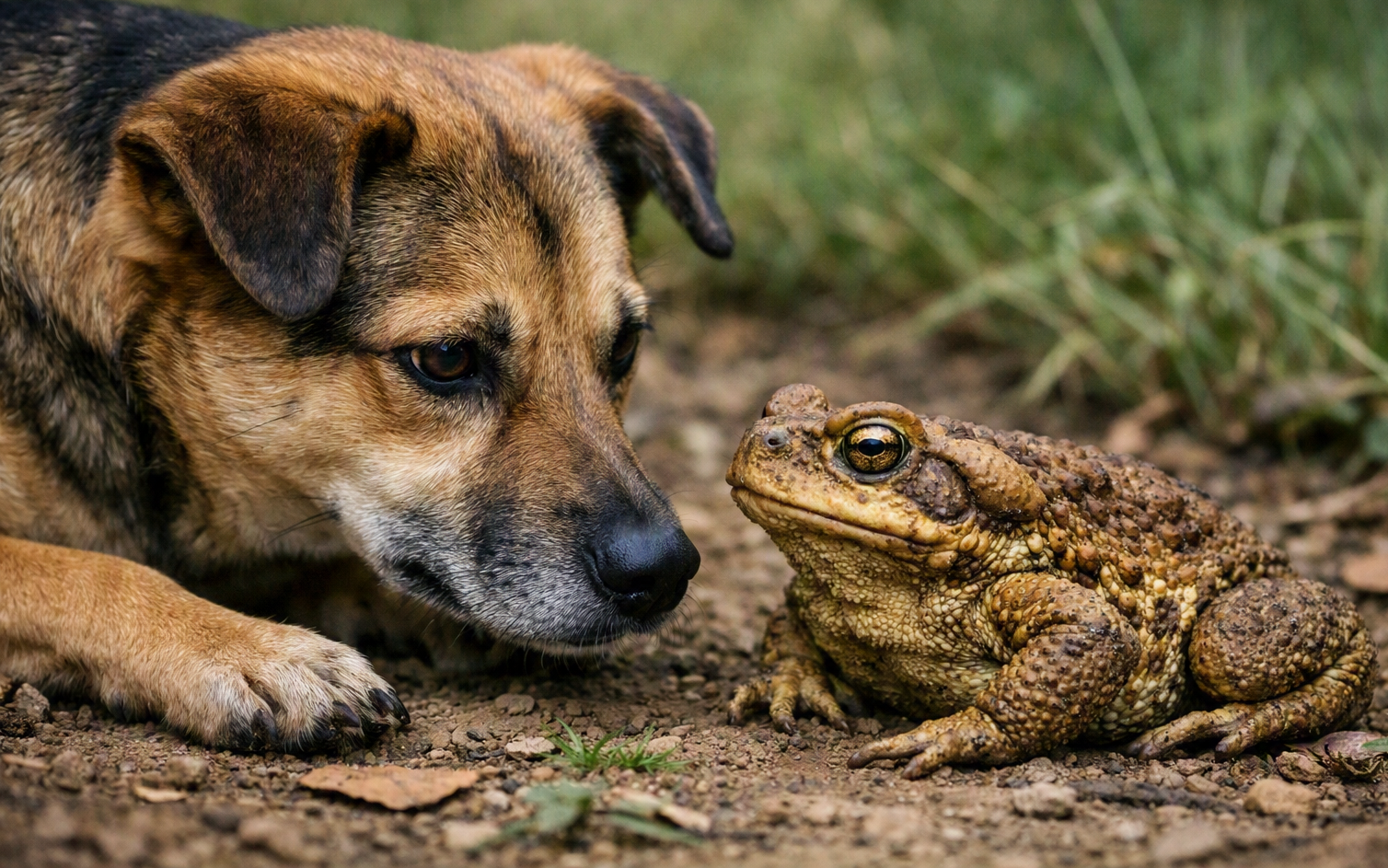
Bufotoxin poisoning in a mixed-breed dog
Case report
DOI:
https://doi.org/10.31533/pubvet.v20n7e1989Keywords:
Amphibian, toxicological emergency, nervous system, supportive therapyAbstract
Toad toxin poisoning is an important toxicological emergency in small animal practice, particularly in tropical regions where interactions between dogs and amphibians are common. This study reports a case of bufotoxin poisoning in a mixed-breed dog treated at a veterinary hospital in Ananindeua, Pará, Brazil. The dog developed an acute onset of clinical signs following contact with a toad, including profuse hypersalivation, vomiting, agitation, and neurological manifestations. Physical examination revealed tachycardia, hyperemic mucous membranes, and restlessness. Hematological evaluation demonstrated leukocytosis with neutrophilia, consistent with an acute inflammatory response. Therapeutic management consisted of immediate oral cavity lavage, intravenous fluid therapy, and supportive pharmacological treatment, including the control of neurological signs. Progressive clinical improvement was observed within the first 48 hours, with no evidence of severe cardiovascular complications. This case highlights the importance of early intervention and appropriate therapeutic management in determining prognosis and emphasizes the relevance of implementing preventive measures in regions with a high risk of exposure to amphibians.
References
Aquino, M. C., & Seroa, M. (2024). Atendimento clínico e tratamento de cadela intoxicada por veneno de sapo (Rhinella marina): Relato de caso. PUBVET, 18(6), 1–9. https://doi.org/10.31533/pubvet.v18n06e1609.
Baltazar, F. N., Augusto, C. F. B., Carminato, C., Faria, P. C. O., & Berl, C. A. (2019). Descrição clínica e achados laboratoriais de cão intoxicado por veneno de sapo (Rhinella icterica) (Anura: Bufonidae): Relato de caso. Revista de Educação Continuada em Medicina Veterinária e Zootecnia do CRMV-SP, 17(2). https://doi.org/10.36440/recmvz.v17i2.37919.
Barbosa, C. M., Medeiros, M. S., Costa, R. C. M., Camplesi, A. C., & Sakate, M. (2009). Toad poisoning in three dogs. Journal of Venomous Animals and Toxins Including Tropical Diseases, 15(4), 789–798.
Campbell, A. (2011). Amphibian toxin exposure in domestic animals. Veterinary Clinics of North America: Small Animal Practice, 41(2), 315–326.
Cao, Z., & Dong, Y. (2024). Research Progress on Detection of Toad Toxin. Forensic Science and Technology, 49(5). https://doi.org/10.16467/j.1008-3650.2023.0047.
Divers, S. J., & Stahl, S. J. (2019). Mader’s reptile and amphibian medicine and surgery-e-book. Elsevier Health Sciences. https://doi.org/10.1016/C2014-0-03734-3.
Durval, T. F., & Cirne, L. C. O. B. (2018). Intoxicação e morte por veneno de sapo em cão de Valença RJ: Relato de caso. PUBVET, 12(10), 1–4. https://doi.org/10.31533/pubvet.v12n10a192.1-4.
Eubig, P. A. (2001). Bufo species toxicosis: Big toad, big problem. In Veterinary Medicine (Vol. 96, Number 8).
Gadelha, I. C. N., & Soto-Blanco, B. (2012). Intoxicação de cães por sapos do gênero Rhinella (Bufo) revisão de literatura. Clínica Veterinária, XVII(100).
Gadelha, I., Melo, M., & Soto-Blanco, B. (2015). Intoxicação espontânea por sapos da espécie Rhinella jimi (Stevaux, 2002) em cães. Revista Brasileira de Higiene e Sanidade Animal, 9(2).
Gallardo-Casas, C. Á., González Garcia, I. M., Sánchez Maldonado, H. A., Jiménez Sánchez, N. G., & Olea Vázquez, J. D. (2023). El Veneno de Sapo de la Caña Rhinella Marina, Anura: Bufonidae Provoca Daño en el Intestino Delgado en Ratones CD1. Ciencia Latina Revista Científica Multidisciplinar, 7(5). https://doi.org/10.37811/cl_rcm.v7i5.8668.
Gwynne, K. (2015). Toad envenomation in dogs: Clinical signs and treatment outcomes. Australian Veterinary Journal, 93(9), 305–312.
Hernández-Rebollo, E., Duque-Carrasco, F. J., Zaragoza-Bayle, C., & Pérez-López, M. (2015). Toad poisoning in dogs from SW Spain: too many cases in a few days! Revista Portuguesa de Ciências Veterinárias, 110.
Keomany, S., Mayxay, M., Souvannasing, P., Vilayhong, C., Stuart, B. L., Srour, L., & Newton, P. N. (2007). Toad poisoning in Laos. American Journal of Tropical Medicine and Hygiene, 77(5). https://doi.org/10.4269/ajtmh.2007.77.850
Khan, C. M., & Line, S. (2013). Manual Merck de Veterinária (Roca, Ed.; 10th ed.).
Liu, Y., Zhang, J., Wang, B., Zheng, F., & Yan, J. (2025). Epidemiological patterns and therapeutic approaches of toad toxin poisoning in a retrospective case study. Scientific Reports, 15(1). https://doi.org/10.1038/s41598-025-89809-0.
Morais, M. H. R., Melo, C. M. F., & Dias, B. O. (2025). Intoxicação por Bufotoxina: Relato de caso. Revista Foco, 18(12). https://doi.org/10.54751/revistafoco.v18n12-149.
O’Connor, R., & Pritchard, J. (2016). Toxicity associated with amphibians. Journal of Exotic Pet Medicine, 25(1), 12–20.
Pessoa, C. R. M. (2013). Intoxicação experimental por veneno de sapo em cães. Pesquisa Veterinária Brasileira, 33(4), 457–462.
Peterson, M. E., & Talcott, P. A. (2013). Small Animal Toxicology (Vol. 1). Saunders.
Sakate, M., & Oliveira, P. C. (2000). Toad envenoming in dogs: Effects and treatment. Journal of Venomous Animals and Toxins, 6(1). https://doi.org/10.1590/s0104-79302000000100003.
Salvago, M. M. R., López, M. A. M., Benítez, L. J., Moya, R. P. J., Palacios, F. O. R., & Sillero, C. L. N. (2009). Intoxicación aguda en perro por toxinas de sapo (Bufo bufo). REDVET. Revista Electrónica de Veterinaria, 10(4), 1–5.
Sonne, L., Rozza, D., Wolffenbuttel, A. N., Meirelles, A. E. W. B., Pedroso, P. M. O., Oliveira, E. C., & Driemeier, D. (2008). Intoxicação por veneno de sapo em um canino. Ciência Rural, 38(6), 1787–1789.
Stockham, S. L., & Scott, M. A. (2011). Fundamentos de patologia clínica veterinária.
Thrall, M. A., Weiser, G., Allison, R. W., & Campbell, T. W. (2022). Veterinary hematology, clinical chemistry, and cytology. John Wiley & Sons.
Downloads
Published
Issue
Section
License
Copyright (c) 2026 Bárbara Maria Sousa Marques, Bianca Veiros Cabral Régis Guimarães, Luísa da Rosa Bassotto, Maria Clara Dantas da Silva, Shirley Silva Rodrigues, Sarah Oliveira Souza Pantoja, Giselle Almeida Couceiro

This work is licensed under a Creative Commons Attribution 4.0 International License.
Você tem o direito de:
Compartilhar — copiar e redistribuir o material em qualquer suporte ou formato
Adaptar — remixar, transformar, e criar a partir do material para qualquer fim, mesmo que comercial.
O licenciante não pode revogar estes direitos desde que você respeite os termos da licença. De acordo com os termos seguintes:
Atribuição
— Você deve dar o crédito apropriado, prover um link para a licença e indicar se mudanças foram feitas. Você deve fazê-lo em qualquer circunstância razoável, mas de nenhuma maneira que sugira que o licenciante apoia você ou o seu uso. Sem restrições adicionais
— Você não pode aplicar termos jurídicos ou medidas de caráter tecnológico que restrinjam legalmente outros de fazerem algo que a licença permita.