Cutaneous mast cell tumor in a dog
Case report
DOI:
https://doi.org/10.31533/pubvet.v20n3e1922Keywords:
Electrochemotherapy, mast cell tumor, perianal region, veterinary oncologyAbstract
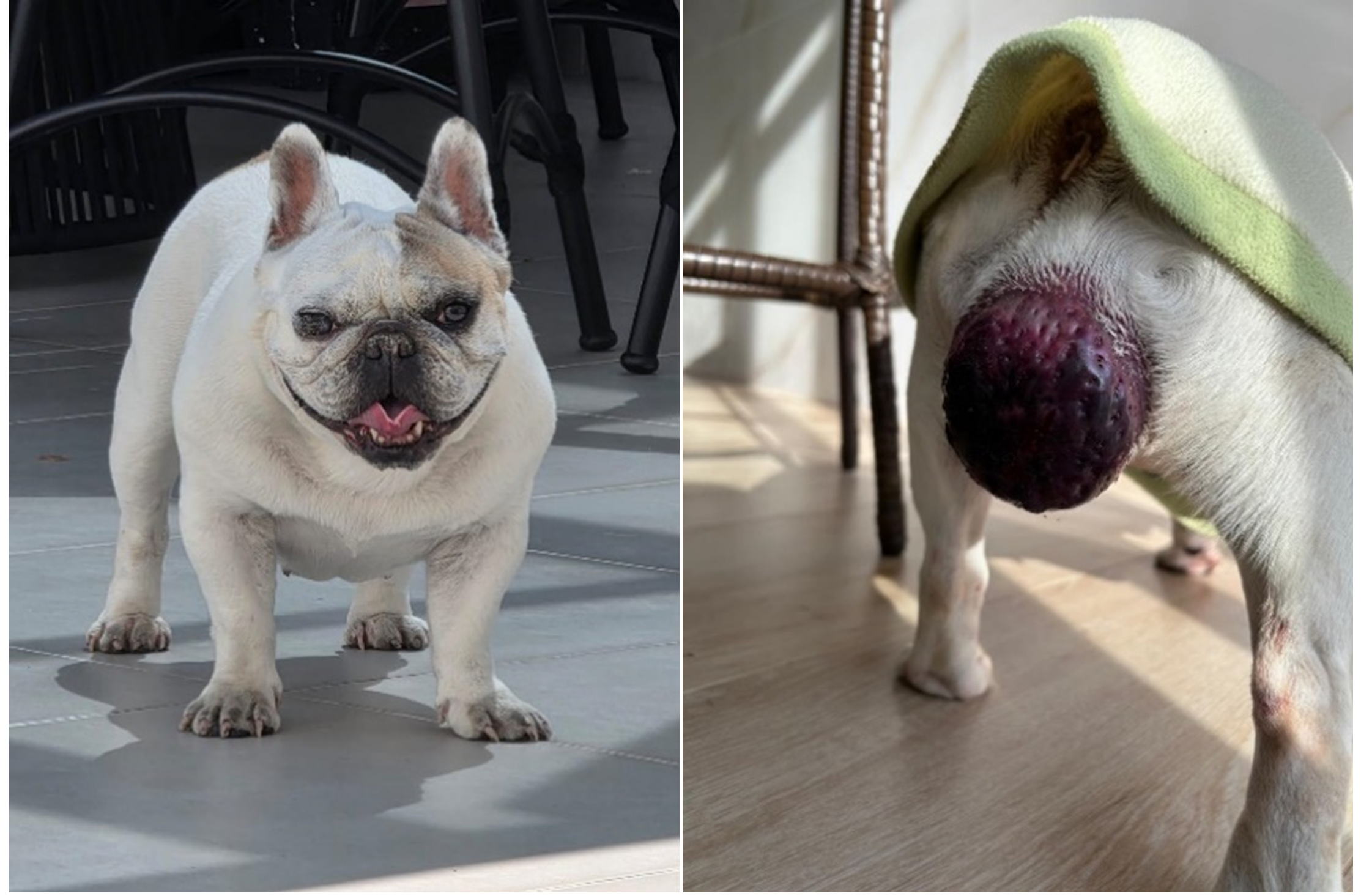
Cutaneous mast cell tumor is a common skin neoplasm in dogs and exhibits unpredictable biological behavior, ranging from localized lesions to more severe systemic conditions. Therefore, the importance of early diagnosis and appropriate treatment selection is emphasized, especially when the neoplasm is located in areas that are difficult to approach surgically, such as the perianal region. This study aimed to report and discuss a case of perianal cutaneous mast cell tumor in a geriatric female English Bulldog, correlating the clinical, diagnostic, and therapeutic findings with the literature. The methodology was based on a review of relevant studies and the description of clinical data obtained from the patient’s medical records, including laboratory tests, imaging studies, cytology, and histopathology. The treatment adopted involved systemic chemotherapy, palliative surgery associated with electrochemotherapy, targeted therapy, and clinical support. It is concluded that, even with limitations for complete surgical resection, a multimodal approach allowed effective clinical control of the disease, reinforcing the importance of periodic follow-up to maintain the patient’s quality of life.
References
Braz, P. H., Braga, L. L., Marinho, C. P., Alves, R. T. B., Xavier, M. E. B., Aréco, T. R. R., & Bacha, F. B. (2017a). Classificação citológica do grau de malignidade de mastocitomas em cães. PUBVET, 11(11), 1114–1118. https://doi.org/10.22256/pubvet.v11n11.1114-1118.
Braz, P. H., Haniu, A. E. C. J., Souza, A. I., & Brum, K. B. (2017b). Epidemiologia do mastocitoma em cães em uma região do Mato Grosso do Sulb. PUBVET, 11(10), 1002–1007. https://doi.org/10.22256/pubvet.v11n10.1002-1007.
Bregantin, A. B. (2018). Importância da avaliação da margem cirúrgica em mastocitoma de cães atendidos no Hospital Veterinário da Universidade Federal de Uberlândia. Universidade Federal de Uberlândia.
Daleck, C. R., Fonseca, C. S., & Canola, J. C. (2016). Oncologia em cães e gatos. Roca.
Furlani, J. M., Daleck, C. R., Vicenti, F. A. M., De Nardi, A. B., Pereira, G. T., Santana, Á. E., Eurides, D., & Silva, L. A. F. (2008). Mastocitoma canino: estudo retrospectivo. Ciência Animal Brasileira, 9(1), 242–250.
Jackson, D. E., Selting, K. A., Spoor, M. S., Henry, C. J., & Wiedmeyer, C. E. (2013). Evaluation of fixation time using Diff-Quik for staining of canine mast cell tumor aspirates. Veterinary Clinical Pathology, 42(1). https://doi.org/10.1111/vcp.12012
Kalil, R. F. T., & Farias, P. C. G. (2022). Associação entre dermatite atópica e mastocitoma em cães. PUBVET, 16(11), 1–8. https://doi.org/10.31533/pubvet.v16n11a1258.1-8.
Kiupel, M., Webster, J. D., Bailey, K. L., Best, S., DeLay, J., Detrisac, C. J., Fitzgerald, S. D., Gamble, D., Ginn, P. E., & Goldschmidt, M. H. (2011). Proposal of a 2-tier histologic grading system for canine cutaneous mast cell tumors to more accurately predict biological behavior. Veterinary Pathology, 48(1), 147–155.
Meuten, D. (2015). Avaliação e interpretação laboratorial do sistema urinário. Hematologia e Bioquímica Clínica Veterinária, 2, 689–1206.
Meuten, D. J. (2016). Tumors in domestic animals. John Wiley & Sons.
Moraes, W. K. C., Moraes, R. S., Pantoja, J. C. F., & Cagnini, D. Q. (2025). Retrospective study of clinicopathological correlations in 543 dogs with cutaneous mast cell tumors. Ciência Rural, 55(12), e20240582. https://doi.org/10.1590/0103-8478cr20240528.
Morris, J., & Dobson, J. M. (2001). Small animal oncology. Wiley Online Library.
Navega, P. R. S. (2011). Mastocitomas em canídeos: Estudo retrospectivo. Universidade Técnica de Lisboa. Faculdade de Medicina Veterinária.
Palma, H. E., Martins, D. B., Basso, P. C., Amaral, A. S., Teixeira, L. V., & Lopes, S. T. dos A. (2009). Mastocitoma cutâneo canino: revisão. Medvep - Revista Científica de Medicina Veterinária - Pequenos Animais e Animais de Estimação, 7, 523–528.
Patnaik, A. K., Ehler, W. J., & Macewen, E. G. (1984). Canine cutaneos mast cell tumors: Morphologic grading and survival time in 83 dogs. Veterinary Pathology, 21(5), 469–474. https://doi.org/10.1177/030098588402100503.
Pereira, L. B. S. B., Pessoa, H. F., Fonseca Filho, L. B., Medeiros, N. C. A., Pontes, M. B., Lima, J. D. O. O., Wanderley, G. M. M., Nascimento, J. C. S., D’Alcantara, N. A. L. G., Lima, J. D. O. O., Wanderley, G. M. M., & Nascimento, J. C. S. S. (2018). Mastocitoma de alto grau em um cão: relato de caso. PUBVET, 12(9), 1–5. https://doi.org/10.31533/pubvet.v12n9a166.1-5.
Spugnini, E. P., Vincenzi, B., Citro, G., Dotsinsky, I., Mudrov, T., & Baldi, A. (2011). Evaluation of Cisplatin as an Electrochemotherapy Agent for the Treatment of Incompletely Excised Mast Cell Tumors in Dogs. Journal of Veterinary Internal Medicine, 25(2), 407–411. https://doi.org/10.1111/j.1939-1676.2011.0678.x.
Valli, V. E., Bienzle, D., Meuten, D. J., & Linder, K. E. (2017). Tumors of the hemolymphatic system. Tumors in Domestic Animals, 5, 203–321. https://doi.org/10.1002/9781119181200.ch7.
Warland, J., & Dobson, J. (2013). Breed predispositions in canine mast cell tumour: A single centre experience in the United Kingdom. Veterinary Journal, 197(2), 496–498. https://doi.org/10.1016/j.tvjl.2013.02.017.
Downloads
Published
Issue
Section
License
Copyright (c) 2026 Guilherme Vitorino Chagas, John Ruan Rodrigues Brito, Pietro Augusto Gonçalves Ferreira, Vivian Figueira Almeida, Lucas Braga Silva

This work is licensed under a Creative Commons Attribution 4.0 International License.
Você tem o direito de:
Compartilhar — copiar e redistribuir o material em qualquer suporte ou formato
Adaptar — remixar, transformar, e criar a partir do material para qualquer fim, mesmo que comercial.
O licenciante não pode revogar estes direitos desde que você respeite os termos da licença. De acordo com os termos seguintes:
Atribuição
— Você deve dar o crédito apropriado, prover um link para a licença e indicar se mudanças foram feitas. Você deve fazê-lo em qualquer circunstância razoável, mas de nenhuma maneira que sugira que o licenciante apoia você ou o seu uso. Sem restrições adicionais
— Você não pode aplicar termos jurídicos ou medidas de caráter tecnológico que restrinjam legalmente outros de fazerem algo que a licença permita.