Bacterial biofilms of interest to the food industry
Review
DOI:
https://doi.org/10.31533/pubvet.v19n10e1850Keywords:
Biofilms, contamination, food industry, food qualityAbstract
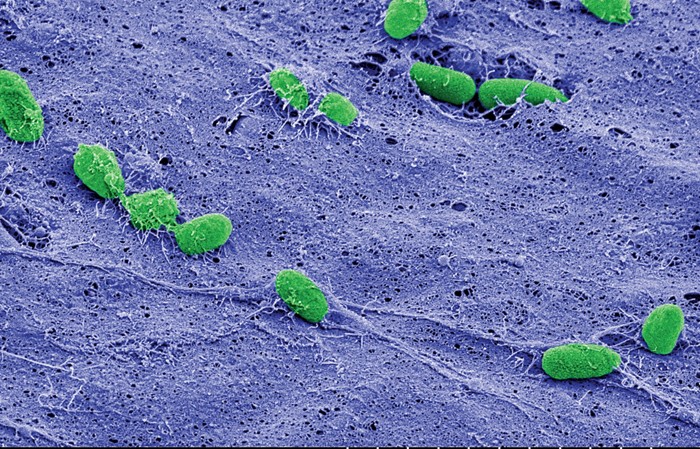
Biofilms are communities of microorganisms fixed on biotic or abiotic surfaces, and their formation causes an important impact on the food industries, leading to cross-contamination, in addition to increased costs for companies due to the deterioration of structure and equipment, and the increased use of sanitizers and disinfectants. Therefore, it is essential to act mainly to prevent biofilm formation. In relation to bacterial biofilms, Listeria monocytogenes, Staphylococcus aureus, Salmonella, Escherichia coli, Bacillus cereus, and Pseudomonas aeruginosa have been cited as the main biofilm formers, in addition to their importance as pathogens and disease-causing agents, impacting human health and deteriorating food and equipment. Several studies aim to seek measures to prevent and control the formation of biofilms, including the use of sanitizers alone, or in combination with each other, the use of essential oils, nanoparticles, electrochemically activated water, and biofilms formed by non-pathogenic and non-deteriorating microorganisms that act as competition. Thus, it is concluded that reducing the impact of these microorganisms in the food industries is possible.
References
Akbar, A., & Anal, A. K. (2013). Prevalence and antibiogram study of Salmonella and Staphylococcus aureus in poultry meat. Asian Pacific Journal of Tropical Biomedicine, 3(2), 163–168. https://doi.org/http://dx.doi.org/10.1016/S2221-1691(13)60043-X.
Al-Rifai, R. H., Chaabna, K., Denagamage, T., & Alali, W. Q. (2020). Prevalence of non-typhoidal Salmonella enterica in food products in the Middle East and North Africa: A systematic review and meta-analysis. Food Control, 109, 106908. https://doi.org/10.1016/j.foodcont.2019.106908.
Alves, B. F. C., Chaves, A. J. S., Vieira, N. F., Chaves, G. V., França, P. M., Barezani, A. S. A., & Soares, P. H. A. (2020). Sensibilidade de Staphylococcus aureus aos antimicrobianos usados no tratamento da mastite bovina: Revisão. PUBVET, 14(4), 1–6. https://doi.org/10.31533/pubvet.v14n4a557.1-6.
Aman, M., Aneeqha, N., Bristi, K., Deeksha, J., Afza, N., Sindhuja, V., & Shastry, R. P. (2021). Lactic acid bacteria inhibit quorum sensing and biofilm formation of Pseudomonas aeruginosa strain JUPG01 isolated from rancid butter. Biocatalysis and Agricultural Biotechnology, 36. https://doi.org/10.1016/j.bcab.2021.102115.
Antunes, L. L., & Reis, R. Z. (2021). Pseudomonas spp. em alimentos: Uma revisão. Anais Do Webnário Internacional de Ciências e Tecnologia em Alimentos, 1–12.
ANVISA. (2005). Regulamento técnico sobre a ingestão diária recomendada (IDR) de proteína, vitaminas e minerais (p. Resolução RDC número 269). Diário Oficial da República Federativa do Brasil.
ANVISA. (2025). Agência Nacional de Vigilância Sanitária.
Bassini, J. (2017). Eficácia de sanitizantes e suscetibilidade antimicrobiana de Salmonella heidelberg isoladas de fontes avícolas. Universidade Federal do Rio Grande do Sul.
Batista, R. D. (2018). Contaminação por Bacillus cereus e os riscos gerados através da intoxicação alimentar. Revista Desafios, 5(2), 1–11.
Bhattacharya, M., Wozniak, D. J., Stoodley, P., & Hall-Stoodley, L. (2015). Prevention and treatment of Staphylococcus aureus biofilms. Expert Review of Anti-Infective Therapy, 13(12), 1499–1516. https://doi.org/10.1586/14787210.2015.1100533.
Borges, A. (2020). Biofilm control with enzymes. In M. Simões, A. Borges, & L. C. Simões (Eds.), Recent trends in biofilm science and technology (pp. 240–271). Academic Press.
Borges, A., Saavedra, M. J., & Simões, M. (2012). The activity of ferulic and gallic acids in biofilm prevention and control of pathogenic bacteria. Biofouling, 28(7), 755–767. https://doi.org/10.1080/08927014.2012.706751.
BRASIL, Agência Nacional de Vigilância Sanitária. (2022). Instrução Normativa nº 161, de 1 de julho de 2022. Estabelece os padrões microbiológicos dos alimentos. Diário Oficial da União, Brasília/DF.
BRASIL, Agência Nacional de Vigilância Sanitária (2005). Resolução RDC nº 269, de 22 de setembro de 2005. Regulamento Técnico sobre a ingestão diária recomendada (IDR) de proteína, vitaminas e minerais. Diário Oficial da União, Brasília/DF.
BRASIL, Ministério da Agricultura, Pecuária e Abastecimento (MAPA) (2020). Salmoneloses. Disponível em: <https://www.gov.br/agricultura/pt-br/assuntos/sanidade-animal-e-vegetal/saude-animal/programas-de-saude-animal/pnsa/salmonelas>. Acesso em: 28/08/2025.
BRASIL, Ministério da Agricultura, Pecuária e Abastecimento (MAPA) (2016). Instrução Normativa nº 20, de 21 de outubro de 2016. Diário Oficial da União, Brasília/DF,
BRASIL, Ministério da Agricultura, Pecuária e Abastecimento (MAPA) (2017). Decreto nº 9.013, de 29 de março de 2017. Dispõe sobre a inspeção industrial e sanitária de produtos de origem animal. Diário Oficial da União, Brasília/DF.
BRASIL, Ministério da Agricultura, Pecuária e Abastecimento (MAPA) (2009). Instrução Normativa nº 09, de 08 de abril de 2009. Diário Oficial da União, Brasília/DF.
BRASIL, Ministério da Saúde. Salmonella (Salmonelose) (2020). Disponível em: <https://www.gov.br/saude/pt-br/assuntos/saude-de-a-a-z/s/salmonella-salmonelose>. Acesso em: 28/08/2025.
Carmo, E. H., Oliveira, A. A., Dimech, P. C., Santos, D. D., Almeida, M. D., & Berto, L. H. (2005). Vigilância epidemiológica das doenças transmitidas por alimentos no Brasil, 1999-2004. Boletim Eletrônico Epidemiológico da Secretária de Vigilância em Saúde, 6(5).
Carrascosa, C., Raheem, D., Ramos, F., Saraiva, A., & Raposo, A. (2021). Microbial biofilms in the food industry - A comprehensive review. International Journal of Environmental Research and Public Health, 18(4), 31. https://doi.org/10.3390/ijerph18042014.
Carvalho, F. O. (2021). Avaliação das propriedades antimicrobianas do óleo essencial de Melissa officinalis em Listeria monocytogenes e aplicação em modelos alimentares. Universidade de Coimbra, Portugal.
Chegini, Z., Khoshbayan, A., Moghadam, M. T., Farahani, I., Jazireian, P., & Shariati, A. (2020). Bacteriophage therapy against Pseudomonas aeruginosa biofilms: A review. Annals of Clinical Microbiology and Antimicrobials, 19(1), 17. https://doi.org/10.1186/s12941-020-00389-5.
Colagiorgi, A., Bruini, I., Di Ciccio, P. A., Zanardi, E., Ghidini, S., & Ianieri, A. (2017). Listeria monocytogenes Biofilms in the wonderland of food industry. Pathogens, 6(3), 41. https://doi.org/10.3390/pathogens6030041.
Costa, N. A. S., Rodrigues, R. S., Carvalho, A. F., & Machado, S. G. (2022). Formação de biofilme e produção de pigmento azul por Pseudomonas: O impacto na indústria de lácteos. The Journal of Engineering and Exact Sciences, 8(8). https://doi.org/10.18540/jcecvl8iss8pp14898-01e.
Coughlan, L. M., Cotter, P. D., Hill, C., & Alvarez-Ordóñez, A. (2016). New weapons to fight old enemies: Novel strategies for the (bio)control of bacterial biofilms in the food industry. Frontiers in Microbiology, 7(OCT), 1641. https://doi.org/10.3389/fmicb.2016.01641.
de Boer, E., Zwartkruis-Nahuis, J. T. M., Wit, B., Huijsdens, X. W., de Neeling, A. J., Bosch, T., van Oosterom, R. A. A., Vila, A., & Heuvelink, A. E. (2009). Prevalence of methicillin-resistant Staphylococcus aureus in meat. International Journal of Food Microbiology, 134(1–2), 52–56. https://doi.org/http://dx.doi.org/10.1016/j.ijfoodmicro.2008.12.007.
Deshmukh, S. P., Patil, S. M., Mullani, S. B., & Delekar, S. D. (2019). Silver nanoparticles as an effective disinfectant: A review. In Materials Science and Engineering C (Vol. 97, pp. 954–965). https://doi.org/10.1016/j.msec.2018.12.102.
Dewey-Mattia, D., Manikonda, K., Hall, A. J., Wise, M. E., & Crowe, S. J. (2018). Surveillance for foodborne disease outbreaks—United States, 2009–2015. Surveillance Summaries, 67(10), 1–10. https://doi.org/10.15585/MMWR.SS6710A1.
Duarte, A. S., Correia, A., & Esteves, A. C. (2016). Bacterial collagenases–a review. Critical Reviews in Microbiology, 42(1), 106–126.
Flemming, H. C., Wingender, J., Szewzyk, U., Steinberg, P., Rice, S. A., & Kjelleberg, S. (2016). Biofilms: An emergent form of bacterial life. Nature Reviews Microbiology, 14(9), 563–675. https://doi.org/10.1038/nrmicro.2016.94.
Foti, M., Daidone, A., Aleo, A., Pizzimenti, A., Giacopello, C., & Mammina, C. (2009). Salmonella bongori 48: z35: –in Migratory Birds, Italy. Emerging Infectious Diseases, 15(3), 502–503.
Galié, S., García-Gutiérrez, C., Miguélez, E. M., Villar, C. J., & Lombó, F. (2018). Biofilms in the food industry: Health aspects and control methods. Frontiers in Microbiology, 9(MAY). https://doi.org/10.3389/fmicb.2018.00898.
Garcia, K. C. O. D., Corrêa, I. M. O., Pereira, L. Q., Silva, T. M., Mioni, M. S. R., Izidoro, A. C. M., Bastos, I. H. V., Gonçalves, G. A. M., Okamoto, A. S., & Andreatti Filho, R. L. (2017). Bacteriophage use to control Salmonella biofilm on surfaces present in chicken slaughterhouses. Poultry Science, 96(9), 3392–3398. https://doi.org/10.3382/ps/pex124.
Gdoura-Ben Amor, M. G., Culot, A., Techer, C., AlReshidi, M., Adnan, M., Jan, S., Baron, F., Grosset, N., Snoussi, M., Gdoura, R., & Gautier, M. (2022). Isolation, partial characterization and application of bacteriophages in eradicating biofilm formation by Bacillus cereus on stainless steel surfaces in food processing facilities. Pathogens, 11(8), 14. https://doi.org/10.3390/pathogens11080872.
Gomes, I. B., Simões, M., & Simões, L. C. (2020). Copper surfaces in biofilm control. Nanomaterials, 10(12). https://doi.org/10.3390/nano10122491.
Gómez-López, V. M., Gobet, J., Selma, M. V., Gil, M. I., & Allende, A. (2013). Operating conditions for the electrolytic disinfection of process wash water from the fresh-cut industry contaminated with E. coli o157:H7. Food Control, 29(1), 42–48. https://doi.org/10.1016/j.foodcont.2012.05.052.
Gray, J. A., Chandry, P. S., Kaur, M., Kocharunchitt, C., Bowman, J. P., & Fox, E. M. (2018). Novel biocontrol methods for Listeria monocytogenes biofilms in food production facilities. Frontiers in Microbiology, 9(APR). https://doi.org/10.3389/fmicb.2018.00605.
Guilbaud, M., Piveteau, P., Desvaux, M., Brisse, S., & Briandet, R. (2015). Exploring the diversity of Listeria monocytogenes biofilm architecture by high-throughput confocal laser scanning microscopy and the predominance of the honeycomb-like morphotype. Applied and Environmental Microbiology, 81(5), 1813–1819. https://doi.org/10.1128/AEM.03173-14.
Harper, D. R., Parracho, H. M. R. T., Walker, J., Sharp, R., Hughes, G., Werthén, M., Lehman, S., & Morales, S. (2014). Bacteriophages and biofilms. Antibiotics, 3(3), 270–284. https://doi.org/10.3390/antibiotics3030270.
Hua, Z., Korany, A. M., El-Shinawy, S. H., & Zhu, M. J. (2019). Comparative evaluation of different sanitizers against Listeria monocytogenes biofilms on major food - Contact surfaces. Frontiers in Microbiology, 10. https://doi.org/10.3389/fmicb.2019.02462.
Ibrahim, G. M., & Morin, P. M. (2018). Salmonella serotyping using whole genome sequencing. Frontiers in Microbiology, 9(DEC). https://doi.org/10.3389/fmicb.2018.02993.
Innes, G. K., Nachman, K. E., Abraham, A. G., Casey, J. A., Patton, A. N., Price, L. B., Tartof, S. Y., & Davis, M. F. (2021). Contamination of retail meat samples with multidrug-resistant organisms in relation to organic and conventional production and processing: A cross-sectional analysis of data from the United States national antimicrobial resistance monitoring system, 2012–2017. Environmental Health Perspectives, 129(5). https://doi.org/10.1289/EHP7327.
Jara, J., Pérez-Ramos, A., Solar, G., Rodríguez, J. M., Fernández, L., & Orgaz, B. (2020). Role of Lactobacillus biofilms in Listeria monocytogenes adhesion to glass surfaces. International Journal of Food Microbiology, 334. https://doi.org/10.1016/j.ijfoodmicro.2020.108804.
Kim, Y., Kim, H., Beuchat, L. R., & Ryu, J. H. (2019). Inhibition of Listeria monocytogenes using biofilms of non-pathogenic soil bacteria (Streptomyces spp.) on stainless steel under desiccated condition. Food Microbiology, 79, 61–65. https://doi.org/10.1016/j.fm.2018.11.007.
Landini, P., Antoniani, D., Burgess, J. G., & Nijland, R. (2010). Molecular mechanisms of compounds affecting bacterial biofilm formation and dispersal. Applied Microbiology and Biotechnology, 86(3), 813–823. https://doi.org/10.1007/s00253-010-2468-8.
Membré, J.-M., Laroche, M., & Magras, C. (2011). Assessment of levels of bacterial contamination of large wild game meat in Europe. Food Microbiology, 28(5), 1072–1079. https://doi.org/http://dx.doi.org/10.1016/j.fm.2011.02.015
Mgomi, F. C., Yang, Y. ran, Cheng, G., & Yang, Z. quan. (2023). Lactic acid bacteria biofilms and their antimicrobial potential against pathogenic microorganisms. Biofilm, 5. https://doi.org/10.1016/j.bioflm.2023.100118.
Moreira, G. S., Peder, L. D., & Silva, C. M. (2016). Prevalência de Staphylococcus aureus nos vestíbulos nasais e mãos de manipuladores de alimentos em um hospital do oeste do Paraná, Brasil. Revista Uniná Review, 28(1), 51–55.
Natress, F. M. (2023). Biofilms formation. In M. Dikeman & C. Devine (Eds.), Encyclopedia of meat sciences (2nd ed., Vol. 1, pp. 64–70). Elsevier.
Notário, F. O. (2019). Efeito do biofilme de bactérias láticas e Bacillus spp. no crescimento de Campylobacter jejuni e Salmonella heidelberg. Universidade Federal de Uberlândia.
Nunes, D. M., Paula, F. J., Melo, J. S., Oliveira, E. C., Meneguini, V. C., Dias, F., Weissheimer, F. L., & Dimech, G. S. (2016). Outbreak of foodborne disease at a mass event of indigenous peoples in Cuiaba, Mato Grosso, Brazil, in 2013. Epidemiologia e Serviços de Saúde: Revista Do Sistema Unico de Saude Do Brasil, 25(1), 195–202.
Obe, T., Richards, A. K., & Shariat, N. W. (2022). Differences in biofilm formation of Salmonella serovars on two surfaces under two temperature conditions. Journal of Applied Microbiology, 132(3), 2410–2420. https://doi.org/10.1111/jam.15381.
Oliveira, D. C. V., Fernandes Júnior, A., Kaneno, R., Silva, M. G., Araújo Júnior, J. P., Silva, N. C. C., & Rall, V. L. M. (2014). Ability of salmonella spp. to produce biofilm is dependent on temperature and surface material. Foodborne Pathogens and Disease, 11(6). https://doi.org/10.1089/fpd.2013.1710.
Oliveira, F. S., Paz, L. N., Mota, T. M., Oriá, A. P., Silva, M. C. A., & Pinna, M. H. (2016). Perfil de resistência de isolados de Escherichia coli a partir de piometra canina. Ciência Animal Brasileira, 17, 615–621. https://doi.org/10.1590/1089-6891v17i438817.
Oliveira, M. M. M., Brugnera, D. F., & Piccoli, R. H. (2010). Biofilmes microbianos na indústria de alimentos: Uma revisão. Revista Do Instituto Adolfo Lutz, 69(3), 277–284. https://doi.org/10.53393/rial.2010.v69.32626.
Paluch, E., Rewak-Soroczyńska, J., Jędrusik, I., Mazurkiewicz, E., & Jermakow, K. (2020). Prevention of biofilm formation by quorum quenching. Applied Microbiology and Biotechnology, 104(5), 1871–1881. https://doi.org/10.1007/s00253-020-10349-w.
Parastan, R., Kargar, M., Solhjoo, K., & Kafilzadeh, F. (2020). Staphylococcus aureus biofilms: Structures, antibiotic resistance, inhibition, and vaccines. Gene Reports, 20. https://doi.org/10.1016/j.genrep.2020.100739.
Parra, A., Toro, M., Jacob, R., Navarrete, P., Troncoso, M., Figueroa, G., & Reyes-Jara, A. (2018). Antimicrobial effect of copper surfaces on bacteria isolated from poultry meat. Brazilian Journal of Microbiology, 49, 113–118. https://doi.org/10.1016/j.bjm.2018.06.008.
Percival, S. L., Gardner, A. J., & Cochrane, C. a. (2011). Biofilms and veterinary medicine. Biofilms and Veterinary Medicine, 6(December 2015).
Perricone, M., Arace, E., Corbo, M. R., Sinigaglia, M., & Bevilacqua, A. (2015). Bioactivity of essential oils: A review on their interaction with food components. Frontiers in Microbiology, 6(FEB). https://doi.org/10.3389/fmicb.2015.00076.
Pitout, J. D. D. (2012). Extraintestinal pathogenic Escherichia coli: a combination of virulence with antibiotic resistance. Frontiers in Microbiology, 3, 1–7. https://doi.org/10.3389/fmicb.2012.00009.
Pontin, P. K. (2020). Atividade antimicrobiana de superfícies de cobre frente à formação de biofilmes por Salmonella Enteritidis e seu potencial aplicação na indústria avícola. Universidade Federal do Rio Grande do Sul.
Quinn, L. Y., Burroughs, W., & Christiansen, W. C. (1962). Continuous culture of ruminal microorganisms in chemically defined medium: II. Culture medium studies. Applied Microbiology, 10(6), 583–592. https://doi.org/10.1128/am.10.6.583-592.1962.
Quinn, P. J., Markey, B. K., Leonard, F. C., Fitzpatrick, E. S., & Fanning, S. (2018). Microbiologia veterinária essencial. Artmed Editora.
Rahman, S. M. E., Islam, S. M. A., Xi, Q., Han, R., Oh, D. H., & Wang, J. (2022). Control of bacterial biofilms in red meat – A systematic review. Meat Science, 192, 192. https://doi.org/10.1016/j.meatsci.2022.108870.
Rahnama, H., Azari, R., Yousefi, M. H., Berizi, E., Mazloomi, S. M., Hosseinzadeh, S., Derakhshan, Z., Ferrante, M., & Conti, G. O. (2023). A systematic review and meta-analysis of the prevalence of Bacillus cereus in foods. Food Control, 143, 109–250. https://doi.org/10.1016/j.foodcont.2022.109250.
Raposo, A., Pérez, E., Faria, C. T., Ferrús, M. A., & Carrascosa, C. (2017). Food spoilage by pseudomonas spp. - An overview. In Foodborne Pathogens and Antibiotic Resistance (p. 41). https://doi.org/10.1002/9781119139188.ch3.
Rastegari, A. A., Yadav, A. N., & Yadav, N. (2020). New and future developments in microbial biotechnology and bioengineering. In New and Future Developments in Microbial Biotechnology and Bioengineering: Trends of Microbial Biotechnology for Sustainable Agriculture and Biomedicine Systems: Diversity and Functional Perspectives. https://doi.org/10.1016/B978-0-12-820526-6.09991-7.
Rivas, L., McDonnell, M. J., Burgess, C. M., O’Brien, M., Navarro-Villa, A., Fanning, S., & Duffy, G. (2010). Inhibition of verocytotoxigenic Escherichia coli in model broth and rumen systems by carvacrol and thymol. International Journal of Food Microbiology, 139(1–2), 70–78. https://doi.org/http://dx.doi.org/10.1016/j.ijfoodmicro.2010.01.029
Rossi, C., Chaves-López, C., Serio, A., Casaccia, M., Maggio, F., & Paparella, A. (2022). Effectiveness and mechanisms of essential oils for biofilm control on food-contact surfaces: An updated review. Critical Reviews in Food Science and Nutrition, 62(8), 2172–2191. https://doi.org/10.1080/10408398.2020.1851169.
Rumbaugh, K. P., & Sauer, K. (2020). Biofilm dispersion. Nature Reviews Microbiology, 18(10), 571–586. https://doi.org/10.1038/s41579-020-0385-0.
Sahade, L. F. (2019). Caracterização fenotípica e análise de genes de expressão de biofilme em cepas de Pseudomonas aeruginosa isoladas em abatedouro-frigorífico bovino. Universidade Estadual de São Paulo.
Santana, M. S. E. (2023). Biofilms of pathogens in the food industry: A review on their formation and control. Universidade Federal de São Carlos.
Santo, C. E., Lam, E. W., Elowsky, C. G., Quaranta, D., Domaille, D. W., Chang, C. J., & Grass, G. (2011). Bacterial killing by dry metallic copper surfaces. Applied and Environmental Microbiology, 77(3), 794–802. https://doi.org/10.1128/AEM.01599-10.
Santos, E. A. R., Tadielo, L. E., Belle, T. H., Schmiedt, J. A., Dias, V. H. C., Orisio, P. H. S., Cerqueira-Cézar, C. K., Pereira, J. G., Barcellos, V. C., & Bersot, L. S. (2023). Activity of rosemary (Rosmarinus officinalis, Family: Lamiaceae) essential oil compared to peracetic acid in Listeria monocytogenes biofilms. Acta Scientiarum - Biological Sciences, 45, 1. https://doi.org/10.4025/actascibiolsci.v45i1.67277.
Santos, K. P. O., Faria, A. C. dos S. R., Silva, D. P. A., Lisboa, P. F., Costa, A. P., & Knackfuss, F. B. (2020). Salmonella spp. como agente causal em Doenças Transmitidas por Alimentos e sua importância na saúde pública: Revisão. PUBVET, 14(10), 1–9. https://doi.org/10.31533/pubvet.v14n10a665.1-9.
Schmelcher, M., & Loessner, M. J. (2016). Bacteriophage endolysins: Applications for food safety. Current Opinion in Biotechnology, 37, 76–87. https://doi.org/10.1016/j.copbio.2015.10.005.
Schmidt, M. G., Von Dessauer, B., Benavente, C., Benadof, D., Cifuentes, P., Elgueta, A., Duran, C., & Navarrete, M. S. (2016). Copper surfaces are associated with significantly lower concentrations of bacteria on selected surfaces within a pediatric intensive care unit. American Journal of Infection Control, 44(2), 203–209. https://doi.org/10.1016/j.ajic.2015.09.008.
Seo, H. J., & Kang, S. S. (2020). Inhibitory effect of bacteriocin produced by Pediococcus acidilactici on the biofilm formation of Salmonella Typhimurium. Food Control, 117. https://doi.org/10.1016/j.foodcont.2020.107361.
Sereno, M. J., Viana, C., Pegoraro, K., Silva, D. A. L., Yamatogi, R. S., Nero, L. A., & Bersot, L. S. (2019). Distribution, adhesion, virulence and antibiotic resistance of persistent Listeria monocytogenes in a pig slaughterhouse in Brazil. Food Microbiology, 84. https://doi.org/10.1016/j.fm.2019.05.018.
Seviour, T., Derlon, N., Dueholm, M. S., Flemming, H. C., Girbal-Neuhauser, E., Horn, H., Kjelleberg, S., van Loosdrecht, M. C. M., Lotti, T., Malpei, M. F., Nerenberg, R., Neu, T. R., Paul, E., Yu, H., & Lin, Y. (2019). Extracellular polymeric substances of biofilms: Suffering from an identity crisis. Water Research, 151, 1–7. https://doi.org/10.1016/j.watres.2018.11.020.
Shi, X., & Zhu, X. (2009). Biofilm formation and food safety in food industries. Trends in Food Science and Technology, 20(9), 407–413. https://doi.org/10.1016/j.tifs.2009.01.054.
Simões, M. (2012). Antimicrobial strategies effective against infectious bacterial biofilms. Current Medicinal Chemistry, 18(14), 2129–2145. https://doi.org/10.2174/092986711795656216.
Singh, J. S. (2019). New and future developments in microbial biotechnology and bioengineering. In New and Future Developments in Microbial Biotechnology and Bioengineering: Microbes in Soil, Crop and Environmental Sustainability. https://doi.org/10.1016/C2018-0-02294-X.
Steenackers, H., Hermans, K., Vanderleyden, J., & De Keersmaecker, S. C. J. (2012). Salmonella biofilms: An overview on occurrence, structure, regulation and eradication. Food Research International, 45(2), 502–531. https://doi.org/10.1016/j.foodres.2011.01.038.
Stiefel, P., Rosenberg, U., Schneider, J., Mauerhofer, S., Maniura-Weber, K., & Ren, Q. (2016). Is biofilm removal properly assessed? Comparison of different quantification methods in a 96-well plate system. Applied Microbiology and Biotechnology, 100(9), 4135–4145. https://doi.org/10.1007/s00253-016-7396-9.
Tadielo, L. E., Bellé, T. H., Santos, E. A. R., Schmiedt, J. A., Cerqueira-Cézar, C. K., Nero, L. A., Yamatogi, R. S., Pereira, J. G., & Bersot, L. S. (2022). Pure and mixed biofilms formation of Listeria monocytogenes and Salmonella Typhimurium on polypropylene surfaces. LWT, 162. https://doi.org/10.1016/j.lwt.2022.113469.
Whiteley, M., Diggle, S. P., & Greenberg, E. P. (2017). Bacterial quorum sensing: The progress and promise of an emerging research area. Nature, 551(7680), 313–320.
Xu, Z., Xie, J., Soteyome, T., Peters, B. M., Shirtliff, M. E., Liu, J., & Harro, J. M. (2019). Polymicrobial interaction and biofilms between Staphylococcus aureus and Pseudomonas aeruginosa: an underestimated concern in food safety. Current Opinion in Food Science, 26, 57–64. https://doi.org/10.1016/j.cofs.2019.03.006.
Yan, P., Chelliah, R., Jo, K. H., Selvakumar, V., Chen, X., Jo, H. Y., & Oh, D. H. (2022). Stability and antibiofilm efficiency of slightly acidic electrolyzed water against mixed-species of Listeria monocytogenes and Staphylococcus aureus. Frontiers in Microbiology, 13. https://doi.org/10.3389/fmicb.2022.865918.
Zhao, L., Li, S., & Yang, H. (2021). Recent advances on research of electrolyzed water and its applications. Current Opinion in Food Science, 41, 180–188. https://doi.org/10.1016/j.cofs.2021.03.004.
Downloads
Published
Issue
Section
License
Copyright (c) 2025 Tales Henrique Vertuan Pereira, Emanoelli Aparecida Rodrigues dos Santos, Evelyn Cristine da Silva, Isabela de Lima Rocha, Camila Lampugnani, Vinicius Cunha Barcellos, Julia Arantes Galvão, Juliano Gonçalves Pereira, Luciano dos Santos Bersot, Leonardo Ereno Tadielo

This work is licensed under a Creative Commons Attribution 4.0 International License.
Você tem o direito de:
Compartilhar — copiar e redistribuir o material em qualquer suporte ou formato
Adaptar — remixar, transformar, e criar a partir do material para qualquer fim, mesmo que comercial.
O licenciante não pode revogar estes direitos desde que você respeite os termos da licença. De acordo com os termos seguintes:
Atribuição
— Você deve dar o crédito apropriado, prover um link para a licença e indicar se mudanças foram feitas. Você deve fazê-lo em qualquer circunstância razoável, mas de nenhuma maneira que sugira que o licenciante apoia você ou o seu uso. Sem restrições adicionais
— Você não pode aplicar termos jurídicos ou medidas de caráter tecnológico que restrinjam legalmente outros de fazerem algo que a licença permita.