Reintroduction of endangered species: challenges and approaches
DOI:
https://doi.org/10.31533/pubvet.v19n08e1814Keywords:
Biodiversity conservation, reintroduction challenges, reintroduction approaches, species reintroductionAbstract
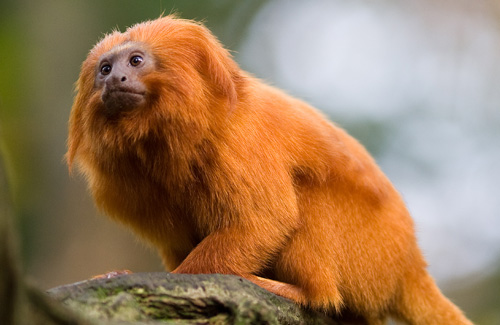
Faunal loss and illegal wildlife trade are major drivers of the biodiversity crisis, threatening countless species both nationally and globally. In this context, the reintroduction of endangered wildlife species has emerged as a vital conservation strategy, aiming to restore viable populations in their natural habitats. This study aims to contextualize the reintroduction of endangered species and contribute to the improvement of conservation strategies. A literature review was conducted using databases such as Google Scholar and PubMed, covering publications from 2013 to 2025. The keywords used were "species reintroduction," "endangered species," "reintroduction challenges," and "reintroduction approaches," including studies focused on the Brazilian context. The findings reveal that reintroducing species is a complex process, facing challenges such as habitat loss and fragmentation, wildlife trafficking, the ecological complexity of target species, and the need for adaptation among individuals raised in captivity. Social factors are also critical, requiring the active participation of local communities to ensure the success of such initiatives. Nevertheless, promising prospects arise from successful cases—such as the golden lion tamarin—and technological advancements in monitoring. Brazilian legislation provides a solid legal framework for fauna protection. In conclusion, improving species reintroduction strategies demands a holistic and integrated approach that considers biological, social, economic and ethical dimensions. Investment in research, adaptive management, and multisector collaboration are essential to reversing biodiversity loss and promoting the long-term sustainability of Brazil’s ecosystems.
References
Armstrong, D. P., Soorae, P. S., Griffiths, C. J., & Seddon, P. J. (2014). Reversing defaunation: Restoring species in a changing world. Science, 345(6195).
BRASIL. (1988). Constituição da República Federativa do Brasil de 1988. Brasília, DF: Senado Federal.
Cubas, Z. S., Silva, J. C. R., & Catão-Dias, J. L. (2014). Tratado de animais selvagens: Medicina veterinária. Roca, São Paulo.
Dirzo, R., Young, H. S., Galetti, M., Ceballos, G., Isaac, N. J. B., & Collen, B. (2014). Defaunation in the anthropocene. Science, 345(6195). https://doi.org/10.1126/science.1251817.
Ellis, E. C., Fuller, D. Q., Kaplan, J. O., & Lutters, W. G. (2013). Dating the anthropocene: Towards an empirical global history of human transformation of the terrestrial biosphere. Elementa, 1. https://doi.org/10.12952/journal.elementa.000018.
Emer, C., Galetti, M., Pizo, M. A., Jordano, P. & Verdú, M. (2019). Defaunation precipitates the extinction of evolutionarily distinct interactions in the Anthropocene. Science Advances, 5(1), eaav6699. https://doi.org/10.1126/sciadv.aav6699
Emmons, L., & Helgen, K. (2016). South American Coati. The IUCN red list of threatened species. https://doi.org/10.2305/iucn.uk.2016-1.rlts.t41684a45216227.
Fox, R. A., & Millam, J. R. (2014). Personality traits of pair members predict pair compatibility and reproductive success in a socially monogamous parrot breeding in captivity. Zoo Biology, 33(3), 166–172. https://doi.org/10.1002/zoo.21121.
Galetti, M., & Dirzo, R. (2013). Ecological and evolutionary consequences of living in a defaunated world. Biological Conservation, 163, 1–6. https://doi.org/10.1016/j.biocon.2013.04.020.
Harrison, R. D., Tan, S., Plotkin, J. B., Slik, F., Detto, M., Brenes, T., Itoh, A., & Davies, S. J. (2013). Consequences of defaunation for a tropical tree community. Ecology Letters, 16(5), 687–694. https://doi.org/10.1111/ele.12102.
IBAMA – Instituto Brasileiro do Meio Ambiente e dos Recursos Naturais Renováveis. (2017). Instrução Normativa nº 8, de 14 de julho de 2017.
IUCN. (2020). Rupornis magnirostris. The IUCN red list of threatened species. https://doi.org/10.2305/IUCN.UK.2020-3.RLTS.T22695880A168800737.en.
Mellor, D.J.; Hunt, S.; Gusset, M. (2015). Caring for wildlife: The world zoo and aquarium animal welfare strategy; WAZA executive office, gland, Switzerland. In Wildlife Conservation (Vol. 109, Issue 1).
Ministério do Meio Ambiente – MMA. Portaria nº 148, de 2022.
Pedrosa, E. P., França, R. C., & Castro, C. S. S. (2016). Mudanças na paisagem e impactos da área urbana no comportamento da preguiça-comum (Bradypus variegatus Schinz, 1825) na APA da Barra do Rio Mamanguape, Paraíba, Brasil. In N. V Almeida & M. D. Silva (Eds.), Geotecnologia e meio ambiente: Analisando uma área de proteção ambiental (pp. 195–218). Editora FeF.
Rauw, W. M., & Gomez-Raya, L. (2015). Genotype by environment interaction and breeding for robustness in livestock. In Frontiers in Genetics (Vol. 6, Issue OCT). https://doi.org/10.3389/fgene.2015.00310.
Seddon, P. J., Griffiths, C. J., Soorae, P. S., & Armstrong, D. P. (2014). Reversing defaunation: Restoring species in a changing world. In Science (Vol. 345, Issue 6195, pp. 406–412). https://doi.org/10.1126/science.1251818,
Silva, T., & Leal, A. H. (2022). Destinação da fauna silvestre resgatada pela equipe da reserva biológica Guaribas na Mata Atlântica do Nordeste Brasileiro. Biodiversidade Brasileira - BioBrasil, 12(1), 288–298. https://doi.org/10.37002/biobrasil.v12i1.1704.
Wakchaure, R., & Ganguly, S. (2015). Marker assisted selection (MAS) in animal breeding: A review. Journal of Drug Metabolism & Toxicology, 06(05). https://doi.org/10.4172/2157-7609.1000e127.
Wakchaure, R., & Ganguly, S. (2016). Captive breeding on endangered wildlife: A review. Journal of Biological & Scientific Opinion, 4(5). https://doi.org/10.7897/2321-6328.04544.
WAZA. (2021). Our approach to animal welfare - WAZA. Https://Www.Waza.Org/.
Young, H. S., McCauley, D. J., Galetti, M., & Dirzo, R. (2016). Patterns, causes, and consequences of anthropocene Defaunation. Annual Review of Ecology, Evolution, and Systematics, 47. https://doi.org/10.1146/annurev-ecolsys-112414-054142.
Downloads
Published
Issue
Section
License
Copyright (c) 2025 Ariadne Sanches Gonçalves, Fernando Correia, Katia Ferreira Mascarenhas, Dr Pedro Enrique Navas Suárez

This work is licensed under a Creative Commons Attribution 4.0 International License.
Você tem o direito de:
Compartilhar — copiar e redistribuir o material em qualquer suporte ou formato
Adaptar — remixar, transformar, e criar a partir do material para qualquer fim, mesmo que comercial.
O licenciante não pode revogar estes direitos desde que você respeite os termos da licença. De acordo com os termos seguintes:
Atribuição
— Você deve dar o crédito apropriado, prover um link para a licença e indicar se mudanças foram feitas. Você deve fazê-lo em qualquer circunstância razoável, mas de nenhuma maneira que sugira que o licenciante apoia você ou o seu uso. Sem restrições adicionais
— Você não pode aplicar termos jurídicos ou medidas de caráter tecnológico que restrinjam legalmente outros de fazerem algo que a licença permita.