Twin pregnancy associated with neonatal maladjustment syndrome in a horse
Case report
DOI:
https://doi.org/10.31533/pubvet.v19n08e1812Keywords:
Equine, twin pregnancy, neonatology, NMS, intensive careAbstract
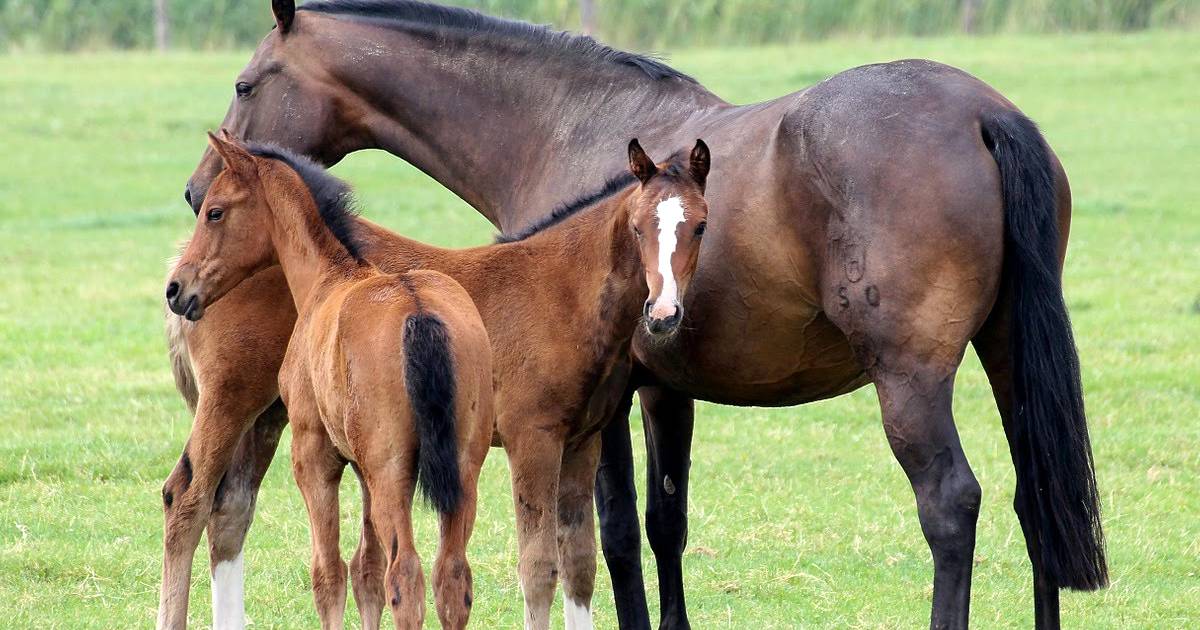
Twin pregnancy in mares is a rare and undesirable condition in equine reproductive practice due to the high incidence of complications such as abortion, stillbirth, and neonatal syndromes. This case report describes a Mangalarga Marchador mare, tended to at HUVET-FUNORTE, whose twin gestation resulted in the birth of two foals diagnosed with Neonatal Maladjustment Syndrome (NMS), both of which underwent intensive care with a positive clinical outcome. The twin pregnancy was diagnosed late, only at the time of delivery, preventing the application of embryonic reduction techniques. The neonates showed classic signs of NMS, such as incoordination, absent suckling reflex, and lethargy. The therapeutic protocol included hemodynamic stabilization, parenteral nutrition, antibiotic therapy, vitamin support, and continuous monitoring. The mare also received intensive postpartum care, including uterine lavage and administration of drugs to aid in general recovery. The therapeutic success reinforces the importance of intensive neonatal management and specialized clinical monitoring, even in reproductive conditions with a reserved prognosis. It is concluded that, despite the risks inherent to twin pregnancies in horses, favorable clinical outcomes can be achieved with accurate diagnosis, multidisciplinary veterinary action, and adequate hospital infrastructure. This case contributes to the literature by demonstrating the feasibility of effective intensive treatment in twin foals affected by NMS.
References
Allen, W. R., Brown, L., Wright, M., & Wilsher, S. (2007). Reproductive efficiency of Flatrace and National Hunt Thoroughbred mares and stallions in England. Equine Veterinary Journal, 39(5), 438–445. https://doi.org/10.2746/042516407X1737581.
Arantes, M. M. F., Lovo, L. M., Deritti, G. O., Martinez, S. B., Rosa Júnior, M. N., Casas, V. F., Pereira, L. F., & Paula, V. H. S. (2021). Gestação gemelar em equinos: Relato de caso. https://doi.org/10.29327/simcav2021.330948.
Arbués, R. F., Quintana, C., Yáñez, E., Kormuta, M., & Fernadéz, J. (2018). Evaluación de diferentes dosis de gonadotrofina coriónica equina em el protocolo de sincronización de celo em ovejas. Revista Veterinária, 29(2), 104–108.
Azevedo, M. V., Souza, N. M., Silva, J. C. F., Batista, I. O., Moura, M. T., Oliveira, M. A. L., Alvarenga, M. A., & Lima, P. F. (2015). Induction of multiple ovulations in mares using low doses of GnRH agonist Deslorelin Acetate at 48 hours after luteolysis. Pferdeheilkunde, 31(2), 160–164. https://doi.org/10.21836/PEM20150208.
Bettencourt, E. M. V., Antunes, L., Gonçalves, A. R., Branco, S., & Rocha, A. (2018). Reprodução em equinos: Manual prático. Universidade de Évora.
Blanchard, T. L., Varner, D. D., & Schumacher, J. (1998). Manual of equine reproduction. Mosby.
Farias, L. D., Neves, A. P., Fiala, S. M. E., & Tarouco, A. K. (2016). Indução da ovulação em éguas: Uma revisão. Revista Brasileira de Reprodução Animal, 40(1), 17–21.
Florido, A. B. (2022). Revisión bibliográfica: Síndrome de abstinencia neonatal. NPunto, V(48).
Gottardi, F. P., Souza Júnior, A., Barbosa, Y. G. S., Marques, C. A. T., Bezerra, L. R., Araújo, M. J., Mingoti, G. Z., & Torreão, J. N. C. (2014). Efeito do flushing sobre o desempenho reprodutivo de ovelhas Morada Nova e Santa Inês submetidas à inseminação artificial em tempo fixo. Arquivo Brasileiro de Medicina Veterinaria e Zootecnia, 66(2), 329–338. https://doi.org/10.1590/1678-41626103.
Inder, T. E., & Volpe, J. J. (2000). Mechanisms of perinatal brain injury. Seminars in Neonatology, 5(1), 64–81. https://doi.org/10.1053/siny.1999.0112.
Lima, D. B., Arrivabene, M., Cavalcante, T. V, Boakari, Y. L., Sousa, R. P. B., & Arribabene, C. (2012). Gestação gemelar em égua mestiça: Relato de caso. VI Congresso Norte Nordeste de Reprodução Animal, 602.
MacPherson, M. L., & Reimer, J. M. (2000). Twin reduction in the mare: Current options. Animal Reproduction Science, 60–61. https://doi.org/10.1016/S0378-4320(00)00112-3.
McKinnon, A. O. (2007). Management of twins. In J. C. Samper, F. J. Pycock, & A. O. McKinnon (Eds.), Current therapy in equine reproduction (Vol. 1, pp. 357–373).
McKinnon, A. O., Squires, E. L., Vaala, W. E., & Varner, D. D. (2011). Equine reproduction. John Wiley & Sons.
Morel, M. C. G. D., Newcombe, J. R., & Reynolds, N. (2015). Asynchronous ovulation in mares: Seasonal variations in frequency. Veterinary Record, 176(12). https://doi.org/10.1136/vr.102308
Newcombe, J. R., & Cuervo-Arango, J. (2016). Comparison of the efficacy of different single doses of buserelin with hCG for timed ovulation induction in the mare. Journal of Equine Veterinary Science, 100(41), 57. https://doi.org/10.1016/j.jevs.2016.04.030.
Pastorello, M., Gastal, M. O., Piquini, G. K., Godoi, D. B., & Gastal, E. L. (2020). Ovarian dynamics and gonadotropins during selection of the dominant follicle in postpartum lactating versus non-postpartum cycling mares. Reproduction, Fertility and Development, 32(2), 191. https://doi.org/10.1071/rdv32n2ab129.
Pereira, G. R., Hodder, A., & Carneiro, G. F. (2014). Diagnóstico e manejo de gestação gemelar na espécie equina. Revista Brasileira de Reprodução Animal, 38(4).
Radostits, O. M., Gay, C. C., Blood, D. C., Hinchcliff, K. W., & McKenzie, R. A. (2010). Clínica Veterinária: um tratado de doenças dos bovinos, ovinos, suínos, caprinos e equinos (Vol. 1). Guanabara Koogan.
Recalde, E. C. S., Silva, J. C. Q., Guimarães, C. F., Veras, M. M., Barbosa, R. G., Alonso, M. A., & Fernandes, C. B. (2017). Pluriparidade nas éguas: Relação com características maternas, placentárias e neonatais. Ciência Animal Brasileira, 18(0), 1–11. https://doi.org/10.1590/1089-6891v18e-33567.
Reed, S. M., Bayly, W. M., & Sellon, D. C. (2022). Medicina interna equina. Guanabara Koogan S.A.
Sena, L. M., Clara, N., Almeida, Í. C., Santos, J. D., & Martins, C. B. (2016). Principais causas de perdas gestacionais na espécie equina: Revisão. Publicações em Medicina Veterinária, 10(12), 933–945.
Silva, T. A. P., Sá, P. C. A., & Ferreira, M. A. (2019). Parto gemelar em égua de raça brasileira de hipismo: Relato de caso. Anais do I Simpósio Internacional de Reprodução.
Smith, K. C., Blunden, A. S., Whitwell, K. E., Dunn, K. A., & Wales, A. D. (2003). A survey of equine abortion, stillbirth and neonatal death in the UK from 1988 to 1997. Equine Veterinary Journal, 35(5), 496–501. https://doi.org/10.2746/042516403775600578.
Soares, G. C. L., Cardoso, C. G., & Júnior, E. M. (2015). Causas e consequências da hipotermia: A importância da monitoração da temperatura no perioperatório. Revista de Investigação Veterinária, 14(6), 1–7.
Vendruscolo, C. P., Carvalho, A. M., Moraes, L. F., Maia, L., Queiroz, D. L., Watanabe, M. J., Yamada, A. L. M., & Alves, A. L. G. (2012). Avaliação da eficácia de diferentes protocolos de preparo do Plasma Rico em Plaquetas para uso em Medicina Equina. Pesquisa Veterinária Brasileira, 32, 106–110. https://doi.org/10.1590/S0100-736X2012000200002.
Downloads
Published
Issue
Section
License
Copyright (c) 2025 Pedro Henrique Damasceno Pinto, Marielly Maria Almeida Moura, Renê Ferreira Costa, Daniel Ananias de Assis Pires, Otaviano de Souza Pires Neto, Juliano Santos Siqueira, Maria Dulcíneia da Costa, Maria Julia Ribeiro Magalhães, Maria Eduarda Ramalho Lopes, Ruanna Rosa Gitirana, Ronníe Antunes de Assis, Matheus Pereira da Silva, Lívia Rodrigues Mendes1

This work is licensed under a Creative Commons Attribution 4.0 International License.
Você tem o direito de:
Compartilhar — copiar e redistribuir o material em qualquer suporte ou formato
Adaptar — remixar, transformar, e criar a partir do material para qualquer fim, mesmo que comercial.
O licenciante não pode revogar estes direitos desde que você respeite os termos da licença. De acordo com os termos seguintes:
Atribuição
— Você deve dar o crédito apropriado, prover um link para a licença e indicar se mudanças foram feitas. Você deve fazê-lo em qualquer circunstância razoável, mas de nenhuma maneira que sugira que o licenciante apoia você ou o seu uso. Sem restrições adicionais
— Você não pode aplicar termos jurídicos ou medidas de caráter tecnológico que restrinjam legalmente outros de fazerem algo que a licença permita.