Outbreak of infectious pododermatitis in a sheep flock in southern Bahia
Case report
DOI:
https://doi.org/10.31533/pubvet.v19n07e1797Keywords:
Bahia, hoof, sheep, pododermatitis, preventionAbstract
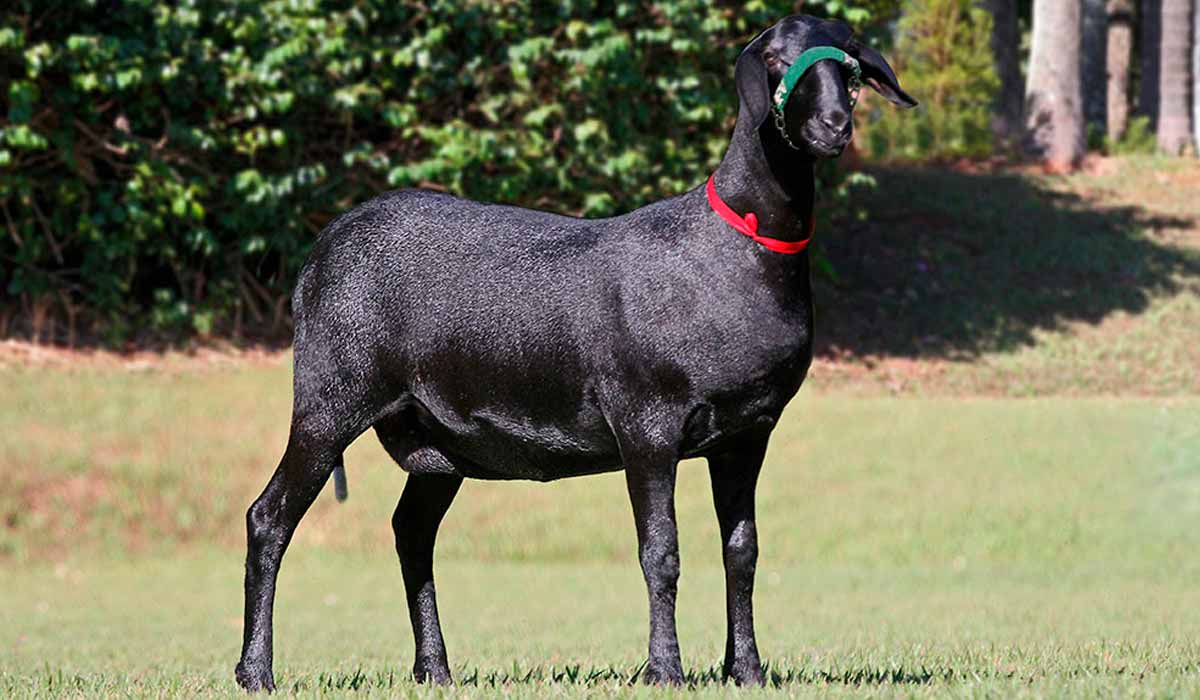
Northeastern Brazil, particularly the state of Bahia, stands out in sheep farming due to its local climate and vegetation, which favor the adaptation of these animals. This activity is advantageous for small-scale producers, as it involves low costs and offers ease of commercialization. In 2023, Bahia accounted for 23% of the national sheep herd, establishing itself as the leading producer. However, diseases affecting these animals, such as infectious pododermatitis, cause significant economic losses due to reduced forage intake, decreased weight gain, and infertility. Pododermatitis, caused by bacteria such as Dichelobacter nodosus and Fusobacterium necrophorum, is one of the most common diseases among goats and sheep. It leads to hoof inflammation resulting in severe lameness, and can seriously compromise the animals' health, potentially leading to death. To address this issue, the Bahia State Agricultural Defense Agency (ADAB) implemented the State Program for the Health of Goats and Sheep (PESCO), aimed at controlling and eradicating such diseases. This article aims to describe an outbreak of infectious pododermatitis in a flock in southern Bahia, discussing its etiology, epidemiology, pathogenesis, clinical signs, and diagnosis, as well as emphasizing the importance of prophylactic measures for disease control and the prevention of economic losses.
References
Abbott, K. A., & Lewis, C. J. (2005). Current approaches to the management of ovine footrot. Veterinary Journal, 169(1), 28–41. https://doi.org/10.1016/j.tvjl.2004.05.008.
Aguiar, M. G. N., Cunha, A. A. O., Silva, T. R., Araújo, J. R. B., Garino Júnior, F., Simões, S. V., & Riet-Correa, F. (2009). Pododermatite infecciosa em ovinos e caprinos no Sertão Paraibano. Ciência Animal Brasileira, Sup. 1.
ANUALPEC. (2025). Anuário da Pecuária Brasileira (20th ed., Vol. 1). Instituto FNP.
Aquino, R. S., Lemos, C. G., Alencar, C. A., Silva, E. G., Lima, R., Gomes, J. A. F., Silva, A. F., Silva Lima, R., Gomes, J. A. F., & Silva, A. F. (2016). A realidade da caprinocultura e ovinocultura no semiárido brasileiro: um retrato do sertão do Araripe, Pernambuco. PUBVET, 10(4), 271–281. https://doi.org/10.22256/pubvet.v10n4.271-281.
Baxter, G. M., Stashak, J. K., & Parks, L. (2011). Lameness in the extremities. In G. M. Baxter (Ed.), Adam’s and Stashak’s Lameness in Horses. Wiley Blackwell.
Bendigo, T. G. (2007). Footrot in sheep: Diseases facts, diagnosis, treatment, prevention and damage control, benign footrot.
Egerton, J. R., Roberts, D. S., Parsonson, I. M. (1989). Etiologia e patogênese da podridão do casco ovino: um estudo histológico da invasão bacteriana. Journal of Comparative Pathology,100 (4), 411–20.
EMBRAPA. (2021). Pododermatite contagiosa: estratégias de manejo e controle. EMBRAPA.
Gargano, R. G., Benesi, F. J., Birgel Júnior, E. H., Della Libera, A. M. M. P., Gregory, L., Sucupira, M. C. A., Ortolani, E. L., Gomes, V., & Pogliani, F. C. (2013). Estudo retrospectivo das afecções locomotoras em ruminantes atendidos na Faculdade de Medicina Veterinária e Zootecnia da Universidade de São Paulo entre 2000 e 2012. Brazilian Journal of Veterinary Research and Animal Science, 50(4), 286–293.
Green, L. E., & George, T. R. N. (2008). Assessment of current knowledge of footrot in sheep with particular reference to Dichelobacter nodosus and implications for elimination or control strategies for sheep in Great Britain. Veterinary Journal, 175(2), 173–180. https://doi.org/10.1016/j.tvjl.2007.01.014.
Greber, D., Bearth, G., Lüchinger, R., Schuepbach-Regula, G., Steiner, A. (2021). Podridão do casco ovina: uma revisão do conhecimento atual. The Veterinary Journal, 338:404–88. doi:10.1016/j.tvjl.2021.105317.
Hussni, C. A., Wludarski, A. R. L., Nicoletti, J. L. de M., Thomassian, A., Alves, A. L. G., Figueiredo, L. M. A. de, & Curi, P. R. (2001). Comparaçäo entre timerosal, glicerina iodada e iodo polivinilpirrolidona com açúcar, na cicatrizaçäo de pele em eqüinos. Arquivo de Cências, Veterinária e Zoologia, 4(2), 109–118.
Jesus Junior, C., Rodrigues, L. S., & Moraes, V. E. G. (2010). Ovinocaprinocultura de corte: a convivência dos extremos. BNDS - Setorial, 31, 281–320.
Main, D. C. J., Leach, K. A., Barker, Z. E., Sedgwick, A. K., Maggs, C. M., Bell, N. J., & Whay, H. R. (2012). Evaluating an intervention to reduce lameness in dairy cattle. Journal of Dairy Science, 95(6), 2946–2954. https://doi.org/http://dx.doi.org/10.3168/jds.2011-4678.
Olechnowicz, J., & Jaśkowski, J. M. (2011). Lameness in small ruminants. In Medycyna Weterynaryjna (Vol. 67, Issue 11).
PESCO (2013). Bahia. Agência de Defesa Agropecuária da Bahia – ADAB. Bahia avança para implantar Programa Estadual de Sanidade dos Caprinos e Ovinos (PESCO) [Internet]. Salvador: Governo do Estado da Bahia; 2013 [citado 2025 jul. 9]. Disponível em: https://www.ba.gov.br/comunicacao/2013/10/noticias/bahia-avanca-para-implantar-programa-estadual-de-sanidade-dos-caprinos-e-ovinos
PNSCO (2025). Ministério da Agricultura, Pecuária e Abastecimento (MAPA). Programa Nacional de Sanidade de Caprinos e Ovinos (PNSCO). Revisado em 17 fev 2025 [Internet]. Brasil: MAPA; 2025 [citado 2025 jul. 9]. Disponível em: https://www.gov.br/agricultura/pt-br/assuntos/sanidade-animal-e-vegetal/saude-animal/programas-de-saude-animal/sanidade-de-caprinos-e-ovinos
Raadsma, H. W., & Dhungyel, O. P. (2013). A review of footrot in sheep: New approaches for control of virulent footrot. Livestock Science, 156(1–3), 115–125. https://doi.org/10.1016/j.livsci.2013.06.011.
Raadsma, H. W., & Egerton, J. R. (2013). A review of footrot in sheep: Aetiology, risk factors and control methods. In Livestock Science (Vol. 156, Issues 1–3, pp. 106–114). https://doi.org/10.1016/j.livsci.2013.06.009.
Rihardson, A. E., & Hoskins, W. (2014). The role of antibiotic therapy in the treatment of ovine footrot. Journal of Veterinary Research, 98–107.
Silva, F. F., Alves, C. G. T., & Silva Júnior, F. F. (2016). Pododermatite solar circunscrita, úlcera de husterholz ou úlcera da sola. Ciência Veterinária Nos Trópicos, 9(2/3), 102–105.
Silva, L. A. F., Rezende, M. R., Romani, A. F., Fioravanti, M. C. S., Cunha, P. H. J., Borges, J. R. J., Macedo, S. P., Damasceno, A. D., Rabelo, R. E., & Garcia, A. M. (2006). Pododermatite séptica em bovinos: evolução clínica da fase inicial. Brazilian Journal of Veterinary Research and Animal Science, 43(5), 674–680. https://doi.org/10.11606/issn.1678-4456.bjvras.2006.26577.
Stokka, G. L., Lechtenberg, K., Edwards, T., MacGregor, S., Voss, K., Griffin, D., Grotelueschen, D. M., Smith, R. A., & Perino, L. J. (2001). Lameness in feedlot cattle. Veterinary Clinics of North America: Food Animal Practice, 17(1), 189–207. https://doi.org/10.1016/S0749-0720(15)30062-1.
Tadich, E., & Hernandéz, M. (2000). Prevalencia de lesiones podales en ovinos de 25 exploraciones familiares de la provincia de Valdivia. Archivos de Medicina Veterinaria, 32(1), 63–64.
Viana, J. G. A. (2008). Panorama geral da ovinocultura no mundo e no Brasil. Revista Ovinos, 4(12), 1–9.
Zhou, H., & Hickford, J. G. H. (2000). Extensive diversity in New Zealand Dichelobacter nodosus strains from infected sheep and goats. Veterinary Microbiology, 71(1–2), 113–123. https://doi.org/10.1016/S0378-1135(99)00155-8.
Downloads
Published
Issue
Section
License
Copyright (c) 2025 Lorrana Costa, Maria Antonia Oliveira Santana , Victor Araújo Nunes , Kailly Santos de Almeida

This work is licensed under a Creative Commons Attribution 4.0 International License.
Você tem o direito de:
Compartilhar — copiar e redistribuir o material em qualquer suporte ou formato
Adaptar — remixar, transformar, e criar a partir do material para qualquer fim, mesmo que comercial.
O licenciante não pode revogar estes direitos desde que você respeite os termos da licença. De acordo com os termos seguintes:
Atribuição
— Você deve dar o crédito apropriado, prover um link para a licença e indicar se mudanças foram feitas. Você deve fazê-lo em qualquer circunstância razoável, mas de nenhuma maneira que sugira que o licenciante apoia você ou o seu uso. Sem restrições adicionais
— Você não pode aplicar termos jurídicos ou medidas de caráter tecnológico que restrinjam legalmente outros de fazerem algo que a licença permita.